I remember seeing David Byrne and his latin orchestra on, I believe, the Arsenio Hall Show playing “Dirty Old Town” and I was in awe. By this point I was considering myself a drummer and any latin groove had me hooked pretty quickly. I mean, why is the guy who was “Burning Down the House” on my TV screen as Ricky Ricardo? I don’t know and I don’t care, just give me more!
The whole album, Rei Momo, is Byrne trying out a variety of latin grooves. What made it great for me was he took the time to name the styles in the liner notes!
“Dirty Old Town” has the groove, the horns, the build-up, the catchy hook, the lyrical picture painting, the tight stops…
We’ll hear more from Byrne later, but this song is the last of the four horse-songs of Nathan’s favorite pop apocalypse.
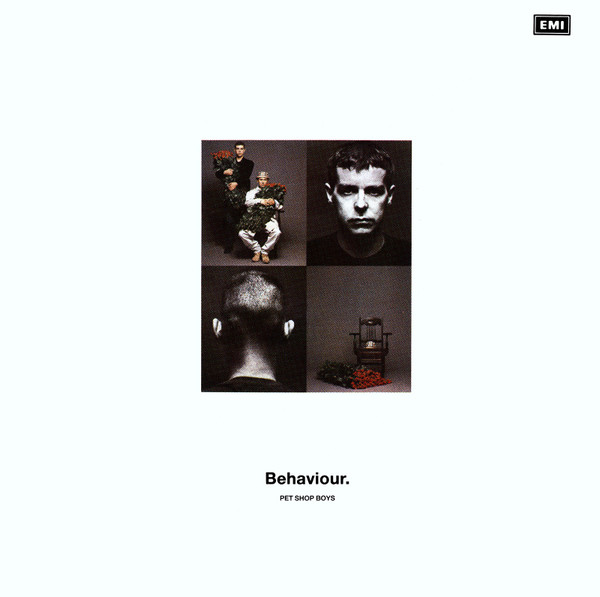
Everyone knows “West End Girls”, and it is a great song, but there is such a deep catalog of incredible song writing found in the Pet Shop Boys. My favorite album of theirs is Behavior, and I’ve heard Axel Rose’s loved the album as well for whatever that’s worth. This was also the album that the non-music loving, sports playing, cheap beer drinking, neighborhood boys I hung out with growing up actually liked too.
Why does “My October Symphony” stand out as my favorite Pet Shop Boys song and one of my favorite songs of all time?
First, the guitar playing by Johnny Marr. After The Smiths broke up, he played on some tracks with a few acts, some of which we will hear later. He was already forming a super group with Bernard Sumner of Joy Division/New Order called Electronic, and the Pet Shop Boys recorded with Sumner and Marr for their first single “Getting Away With It.” It makes sense that Marr would pop over to record with them on their album.
Second, the groove. I just dig it. It captures the feel of a Fall day, a little behind the beat, which is hard since this is mostly synths. I play this song as often as I can in October.
Third, the topic. This was release in 1990 and so was around the collapse of the Soviet Union and communism in Russia. This song is written from the perspective of a Russian composer who was now unsure what to do with his work? Art was mandated by the government, and so needed to promote the wonderfulness of the communist revolution and the state. So, if that all fell apart, now what? Was it all just a waste? “Shall I rewrite or revise my October symphony? Or as an indication, change the dedication, from revolution, to revelation?”
The Beautiful South is one of my favorite bands and easily my favorite one that very few people in the US know about. Those who are introduced to them by me tend to dislike them, though I’ve had a few converts over the years. Most people have heard of, and prefer, The Housemartins, from which a few members came before that group split.
Why do folks have a hard time getting into them?
One, they are very British.
Two, their music is often upbeat, but not punk upbeat. I read a book written about them in which one of the three vocalists described their sound as a sort of (white) British R&B/pop blend.
Three, their lyrics can be very dark. The contrast between upbeat music and dark lyrics is honestly what drew me to them in the first place. This song, “We Are Each Other,” originally included the line in the chorus, “Closer than a cat to the child that she’ll smother,” but in later releases, that was replaced with the line, “Closer than a secret agent working undercover,” which is a shame. I still have a copy of the original.
This was the first song I heard from them, played on a local alternative rock station, and it was love at first listen. I grabbed the album it was on, and well, yeah, it took a few listens. There was a song about a local drunk dying, a song about how love songs are murder songs…
“We Are Each Other” really hits the lyrical sweet spot in my head, although I interpret it differently than the singer, Paul Heaton. For him, this is a song about the drudgery of long relationship. For me, it’s super romantic.
I also used to play this one when I did my “name the original artist for a beer” bit on acoustic guitar. This was back when wasn’t easy to look these things up on a phone. More often than not, there would be someone with a genuine look of surprise and glee that I was playing this song, but it was never more than one.
Peter Murphy was in the first goth rock band Bauhaus. The funny thing about many of these early goth bands is that they didn’t see themselves as goth, which I find hilarious. The first song to put them on the map was “Bela Lugosi’s Dead.” I’ve heard they claimed it was supposed to be tongue-in-cheek, but, come on. He sung it upside down in a coffin when I saw them in concert.
But Bauhaus is a hard band to get into outside of their cover of “Ziggy Stardust.” Tired of being compared vocally to David Bowie, they did a cover as clean and no-nonsense as they could on a lark and it ended up as their biggest hit. Once again, come on.
Peter Murphy’s solo career on the other hand, was much more accessible. The album Deep, which carried the main singles “Cuts You Up” and “Strange Kind of Love”, but I was drawn to “Crystal Wrists” and it became one of my favorite songs of all time.
I love the way the track starts with a very simple deep electronic pulse before moving into a basic alt rock groove. The vocals start and I am skimming the sounds with him. I tend to be drawn to songs that do a good job with repeating sections of lyrics, alternating between them, such as Psychedelic Furs “Until She Comes”. I also find the use of the term Beelzebub charming.
The song has an explicit rating, and I was flummoxed by this for a long time, as I know this song inside out. I finally figured out the problem was with a term used instead of snicker. The etymology of that term has nothing to do with the racist term used by jackasses in America, but it does share some spelling similarities after the s. Singing along, just use snicker, as I do.
I was in a rock band in high school, and the members were very much into the fanzine/indie/DIY scene. This was where I first heard of Jenny Toomey singing a track with the band Three Shades of Dirty on their Paper Roses demo. My band covered a couple of their songs, but the one with Toomey, “For the Meanwhile,” was my favorite. The way she would belt out lyrics with no hesitation influenced my vocals for years.
I knew of her involvement with an indie “all-star” group called Grenadine and their album Goya, but the first time I saw her live was at Towson with her band, Tsunami, alongside Kristin Thomson. I immediately bought their first album on vinyl at that show, even though, at the time, buying actual records was not the thing to do. I tried to catch them whenever they came around, and after three albums and one compilation, they called it a day.
I then saw her perform solo a few times, and I remember approaching her and asking if she was planning on releasing any of the songs she had performed, as I loved them. She said she was, I said that was great, and walked away. That was all the conversation my nerves could handle.
I ran into her from time to time in clubs in Baltimore, but even saying, “Hi, I’m a fan” when she was drinking a beer at the table right next to me was too much. After Fonzi, she defined cool for me, and her vocals and song styles had a huge influence on my own songwriting. One more follow-up album, where she sang the songs of Bruno Franklin (we’ll hear from him later), and that was it. Recently, they released a Tsunami box set, including all three albums, the compilation of singles, and extras on vinyl.
Sometimes, we really do get what we want.
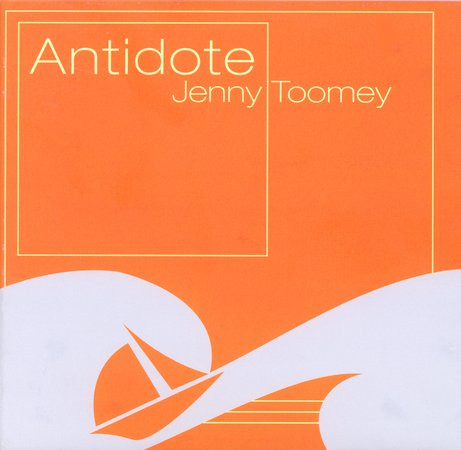
The song “Patsy Cline” is the first track on her solo double album Antidote, and it sets the mood for the two discs, quoting Cline in the chorus and offering (bad) advice for women to stay with crappy partners. I love the simple groove, I love the lyrics, I love the sarcasm.



 Music That Matters (To Me)