A Spotify Playlist Companion

  • 55 Masayuki Tanaka Katamari Damacy “Katamari On The Rocks”

    I love weird video games. There was a time when they were rare, either you needed a pc and so shareware to find them (which really didn’t make them weird so much as simple, unfinished, or not well thought out) or you needed a publisher to take a chance. 

    Weird games also really only came around once we were passed the early years. I have a hard time looking at games on the Atari 2600 through the SNES as having anything weird, since the limitations of the hardware made game abstract to begin with. There was also the issue of manufacturing costs. Games would come on cartridges that were specifically made for the system, but that would often make it so that game publishers would have to pay the console maker not just money for being able to play on their system, but also money for manufacturing the cartridges.

    The original Playstation console changed that dynamic but using CDs instead of cartridges. They were’t the first, but their systems were big sellers. Both the Playstation 1 and Playstation 2 were people’s first CD and DVD players. The cheaper manufacturing costs of disc based systems allowed publishers to take a chance on weird games. But having them tied to a specific console didn’t glut the market with stuff that we now refer to as shovelware. Again, for me, weird games are not just things slapped together. They are an attempt by the game designers to make something different.

    The first weird game I think of is a PS1 game called Tail of the Sun. In this open world game, you play as a member of a prehistoric tribe with the goal of creating a tower of woolly mammoth tusks that would reach the sun. These days, I would definitely have a hard time playing an animal hunting game, but at the time, and maybe because the graphics were nothing close to realistic, I didn’t mind. 

    Open world games are pretty common place today, but back then it was super, super rare. In this game you could go anywhere on the planet. If you could find a land bridge to another continent, you could go over there. Didn’t know where to find a mammoth? There were no signs or maps, you just needed to reason that if they were woolly, they were probably somewhere in the north. 

    Right now you’re going, that’s not that weird. Ok, let’s crank up the weirdness.

    First, your character will need to eat and sleep. The eating requires you to pick up things in the land and chow down. The sleeping, though, that would just happen. You had no control over when it would happen. Climbing a steep mountain that you’d been at for awhile? Odds are your character will fall asleep and slide right on down the mountain. You can wake them up, but if you do they’re likely to fall asleep sooner than normal. 

    Second, your character will die. Sometimes from a fall, sometimes from an animal attack, sometimes from drowning… Many times, they’ll die of old age. Instead of lives, this game has tribes. When you die, you’ll go to a screen with members of your tribe from which you can select a new tribe member and get back to it. Depending on how well your doing, and there really is no way to tell if your doing well in this game, your tribe will grow, giving you more options for your new playable character. 

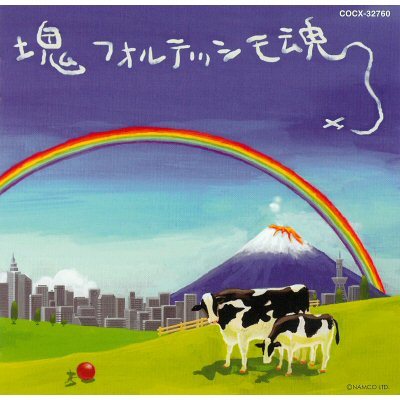
    Now, this track isn’t from Tail of the Sun, it had a minimal soundscape. But I think it’s a good example of a weird game. This track is from a later weird game, Katamari Damacy. The goal of this game is to rebuild stars that your father, The King Of All Cosmos, destroyed in a spontaneous, childish fit. How you go about doing this is by rolling up as many thing as you can into a ball. And by “as many things” I mean just that. You start small rolling up paperclips and tacks and eventually in the game you will be rolling up people, cars, and much more. 

    One big difference between a weird game like Tail of the Sun and Katamari Damacy is that the later was very popular, with a number of spinoff games on a variety of platforms. A second is that Katamari Damacy has an amazing soundtrack. I find myself humming quite frequently even though I haven’t played the game in years. 

  • 54 Kathleen Edwards “Simple Math”

    I like songs with a simple lyrical premise that is a variation of typical lyrical themes. Here we have a song that is not about romantic love, but friendship. Not unheard of, but fairly rare as romantic love seems to be the most common theme of pop music. The song also covers many years of that friendship, which is even rarer. There is also the introduction of math to explain the friendship. Now, we’re in even more uncommon themes. 

    The opening guitar line has a nice tremolo effect that captures the familiarity of the relationship. Tremolo is a mellow vibration style effect that has an almost mid range echo like quality. You’d want to use it for more slow and mid tempo songs as it would clash with more up tempo grooves. I only own three guitar effect pedals, a tube overdrive pedal which is a nice distortion sound for guitar solos, though not really my preferred sound. I bought it at the recommendation of a friend, but I rarely used it. I also had an Ibenez tube screamer which is the distortion pedal I always used to get the punk rock chunky guitar sound I wanted. I wouldn’t use that for solos, but would kick it in for the chorus. The last pedal effect I bought was a tremolo pedal, and I just love it to pieces. I rarely used it live or featured it in any songs I wrote, I just loved the sound. 

    Even now, when the computer programs contain all the pedals you could possibly want, I still will pull it out, stick a battery in it, and noodle away.

  • 53 Tsunami “DMFH”

    I’ve written plenty about Jenny Toomey and Tsunami, so it’s about time that we hear from the band. They released 3 albums and 1 complication of singles, b-sides, and miscellany. I don’t know the story of their last album, Brilliant Mistake, in whether or not Kristen Thomson and Jenny Toomey knew this was going to be the last, but the song “DMFH” comes across as autobiographical in that sense.

    Lyrics in the song contain allusions and outright statements about DIY music, the misery of the traditional music industry, that money is always an instrumental good not an intrinsic one…

    And noble beliefs are wonderful to live by but can be easily lost when you need to put food on the table.

    And friends who share those ideas are fantastic partners until other paths call.

    There really isn’t too much to the song structure itself. It sounds to me like it is the two chords referenced in the opening stanza of C to D (albeit a fancy D) with an occasional drop to a G. But Toomey changes the vocal melodies in several ways throughout the song that give it much more depth than one might expect from two chords.

    Recently as of this writing, Tsunami put out a complete box set of their albums and went on a short tour to promote it. I got to see them in Philadelphia with Ida, and it was a joy. I was especially pleased to see that Toomey and I play the same style guitar. No, I did not pick mine for that reason, I bought it in the years between their last album and now. I can’t even remember the guitar she was playing the last time I saw her before this show. I’m just saying, I can be cool too…

  • 52 Miles Davis “On Green Dolphin Street”

    I want to tell a story about my own musical upbringing. While we’re at it, though, we might as well listen to one of the greatest jazz trumpeters of all time, Miles Davis. 

    I started playing a musical instrument in 3rd grade. The set up was that you could be in the orchestra in 3rd grade, but if you wanted to be in the band you had to wait until 4th. I wanted to play the tenor saxophone, but was unwilling to wait a year and so signed up to play violin. After 3rd grade, on to the tenor sax I went. The tenor sax is an instrument that, when in its case, weighed about as much as I did and was only a little bit shorter than me. The violin was loaned to someone and I never saw it again. It’s a shame, as I really wish we would have held on to it.

    Nonetheless, the tenor saxophone, that was now my instrument. Between the solo in Wham!’s “Careless Whisper” and David Bowie’s playing it, that was what I wanted to play. 

    That lasted until 7th grade, when I finally had enough of lugging it around and it breaking all the time. After years of telling my brother and I that neither one of us could be drummers, my mother relented when I pointed out how inexpensive drum sticks were to getting the tenor repaired all the time. Finally, I was really playing what I wanted to play.

    But I never took drum lessons for two reasons:

    First, my previous experience with private lessons was with my middle school band instructor who would have me play something and then ignore me as he watched wrestling on TV. It was a complete waste of time and money but I didn’t know any better. 

    Second, I never had the ability to sit still long enough to actually practice. I found it boring. I didn’t realize until many, many (seriously, so many that it makes me like like a complete idiot) years later that I could just put on headphones and play along with music I actually wanted to listen to and play.  

    So, any practicing I did was when it was required or I was actually in band class or in marching band practice. This bit me in the ass when I was left on bass drum in 10th grade instead of being moved to snares or triads. It almost happened again in 11th grade, but it was pretty clear that I was not going to tolerate playing bass drum again and so they’d better give me a chance. It was fine. I learned the parts quickly, often faster than the others since I was used to having to figure out how to play something without practicing. 

    I was finally getting to play some more of the drum kit in Jazz band class as well, but it took some time. I didn’t have a decent kit at home until 11th grade, joined a Misfits cover band, and finally got some chops as well as Pop-Eye like forearms. 

    My senior year in high school with my final Jazz recital coming up, I decided to ask for a solo in the piece I was playing, “Green Dolphin Street.” I was given a surprised reaction (“You really want to do that?”) and the go-ahead. During practice in the class when I asked, I was given time during the song to play a solo. 

    It was a disaster. 

    I kept the solo in the tempo of the song, which is a bit slow, and just noodle unconvincingly around the kit. The other students were rightfully giving me side-eye. It was embarrassing, but I knew something from that rehearsal that they didn’t – exactly how to fix it. When asked if I still wanted to do this, I reaffirmed yes, even though the next time would be at the concert. 

    The show started, my song was in the middle, and the audience was full, sure it was mostly parents but still. We get to the point for my solo and, well, I fixed it. The only solo to receive immediate applause and the side-eyed students were grinning ear to ear. Even the other, better drummers were impressed.

    Somewhere I have a tape recording of that, though I probably shouldn’t listen to it. My memory and all its faults is better than the real thing, I’m sure.

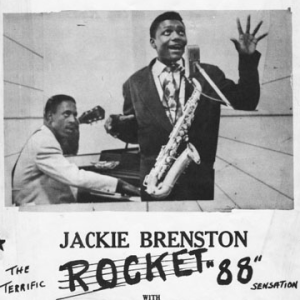
  • 51 Jackie Brenston and his Delta Cats “Rocket 88”

    Ike Turner is still a despicable human being. We should never forget that. This record’s artist is labeled as Jckie Brenston and his Delta Cats, but really this is Ike Turner and his Kings of Rhythm. But since Ike Turner is a despicable human being, it’s great that we can forget his name for this track.

    Ok, let’s talk about “Rocket 88.” 

    If there is a consensus about the first rock and roll song, “Rocket 88” get’s the nod. There are many good reasons for this consensus to be wrong.

    One could argue that there is no such thing as a first anything. Tell that to Neil Armstrong. 

    Still when it comes to genres, which are murky at best, the notion that there could be a first walks the line of nonsensical. 

    One could argue that Rocket 88 is just another song coming out of the Jump Blues style of music, and isn’t remarkable for its sound when placed in that context. Go back to #12 on the list – Louis Jordon and his Tympany Five’s “Choo Choo Ch’Boogie” for a great example of Jump Blues.

    One could argue that the same 1970s music critic and historians who saw blues as being the true start of rock and roll, missing that blues didn’t really become a direct part of the rock and roll repertoire until a bunch of white guitar players in the 70s found influence in that music.

    So, yeah, Rocket 88 being the first rock and roll song does not hod up to scrutiny. But there is a story to the making of Rocket 88 that captures what I see as the underlying DIY theme of rock and roll: try it and see what happens.

    The story goes like this. On their way from Mississippi to record at Sun Studios (where Elvis will later become their biggest artist) in Memphis, Ike, Jackie, and the rest of the band were only a little bit away when their amp fell out of their truck due to an unexpected pothole. The amp broke and they had no money to fix it or buy a new one. As they wee so close they pulled up to the studio and told Sam Phillips what happened and apologized for not being able to record that day. 

    Philips, who was someone who was always looking for a new sound, told them, “Hell, why don’t we plug it in and see what it sounds like?” A couple of well placed crumpled sheets of newspaper, and here we have the first recorded, intentional, distorted guitar. 

    That spirit of, “Hell, let’s see what it sounds like?” To me is that Heart of Rock and Roll that Huey Lewis was singing about. The DIY. The let’s just try to make something that is interesting and sounds cool. The who cares if we know how to play. Just plug it in and see what it sounds like. While the song may not be the first rock and roll record, to me, the story is the first rock and roll.

  • 50 Tracy Chapman “Open Arms”

    Tracy Chapman should not need an introduction, but I recently talked to a someone who didn’t know who Little Richard was and I will never let them forget it. 

    I first encountered Tracy Chapman when her song “Fast Car” was on the alternative radio stations and it had an impact on me on first listen. I know it seems like a lot of songs on this list share that feature, but it’s a rare one for me in general. I ran out and bought the cassette and listened to the whole thing. What did I just buy? I knew I liked “Fast Car” and I knew there was something in the message of her songs that resonated with me. She may have been the first artist I didn’t know I was looking for that actually had something important to sing about. I also knew I wasn’t quite ready for it. I had to approach the rest of the album like I was studying for something and I was determined to get it. And eventually I did. 

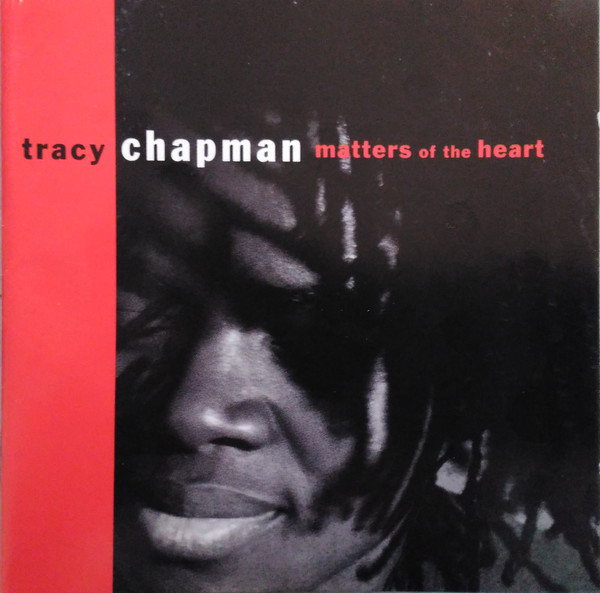
    And eventually I skipped her next album because that first one was a lot of work. Somehow I ended up with a copy of her album Matters of the Heart and enough time had passed that I was ready to dive in again. It wasn’t nearly as hard as the first one, and that original difficulty was probably nothing more than the result of my being probably around middle school age for that first album. Let’s face it, no one thinks straight in middle school. 

    I eventually saw Tracy Chapman at Pier 6 in Baltimore, the day after I had seen Duran Duran at that same location. They were very different experiences and the best thing about seeing her live was that the audience sat and listened as opposed to standing and dancing around the whole time. It was wonderful, a chance to see and study her live. One of my favorite shows I’ve seen. 

  • 49 Leyla McCalla “Me And My Baby”

    I read an article about Leyla McCalla before I heard a note and I had this feeling that this was an artist right up may alley. Combining jazz, Haitian folk, blues, classical, and pop, it’s a mix that makes my brain go brrrrrrrr. 

    For a great blues track, her “Heavy as Lead” just hits the right notes and when that organ comes in for the solo, I just melt every time. 

    But I wanted something that captured more of the mix and was a bit more upbeat (especially after that last tune we covered) and “Me and My Baby” has that nice mix of an up beat, almost ragtime feel. 

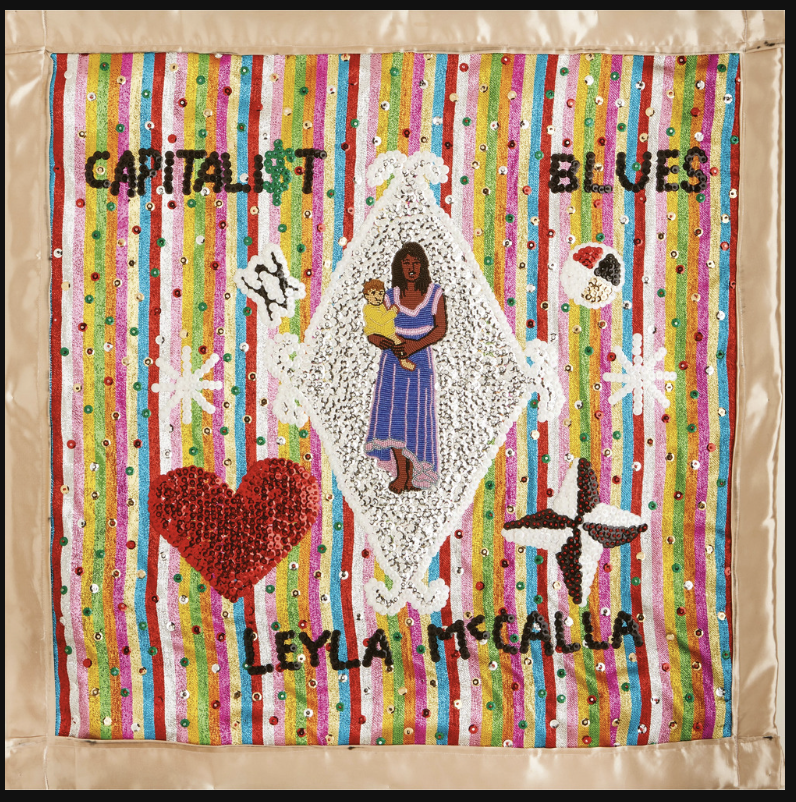
    This album, Capitalist Blues, is incredibly close to a perfect album and well worth your time.

  • 48 J Church “Alone When She Dies”

    J Church is a great example of the anyone can do it principle of independent music. Just play and sing it like you mean it, don’t worry about being perfect, don’t worry about sounding professional. Just get out and do it. 

    Their song “Alone When She Dies” is one of their best and one reason is the lyrics. I knew as I grew up older that I might be the last one in my family standing. I have a couple of cousins that are younger that I’ve seen maybe a total of 6 times in my life. So, knocking on wood, I’m going to get to see most of my family head out before me.

    And then, years after first hearing this song, my grandmother was diagnosed with dementia and eventually, too long really, passed away. “My grandmother died with the mind of a child/All she did was smile/And didn’t recognize my face” This song feels to me like art as prophecy. 

  • 47 Khruangbin “So We Won’t Forget”

    Contemporary popular music is struggling with novelty. This is not the rantings of an old man yelling at clouds, I tend to be on the side of the kids these days rather than complaining about them. Rather, the ability that we have now to track down just about any track we want at any time, coupled with the loss of genre as tribalism, have led to there basically being no real new genres at all. This is not to say that musicians aren’t trying, but for the most part the music that is popular is the same style of music that has been popular for heading on 25 years now. 

    There is a positive side to this, in that there are acts that are comfortable leaning into older genres instead of trying to fit with the new trend. Coming out with a 60s style psychedelic band to compete with grunge was not going to happen. But now, no problem at all. 

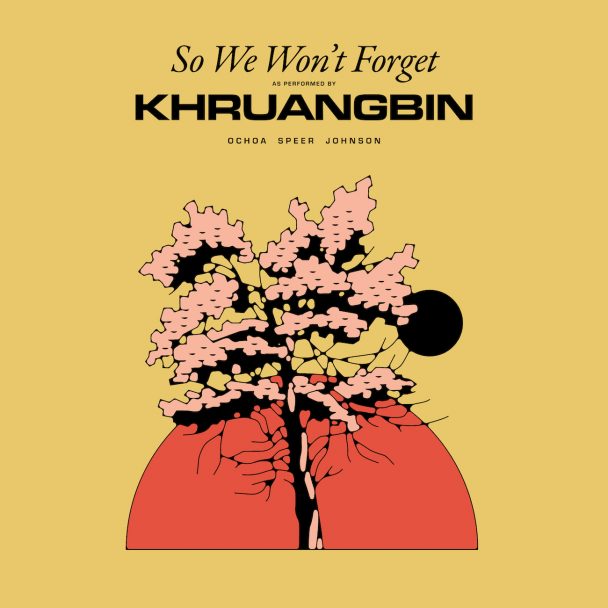
    We’ve seen some examples of this already with Durand Jones and the Indicators and the Black Pumas. Let’s add that modern psychedelic style to this play list with Kruangbin’s “So We Won’t Forget.” Starting with a great rhythm of bass in drums before a heavy chorus and echoed guitar jangles in. This is a song that will get your head bopping into that figure 8 motion.  

  • 46 Kow Otani Shadow of the Colossus “The Sunlit Earth”

    Shadow of the Colossus is the story of a young man known as Wander who arrives in a forbidden land of ruins with his horse, Argo, with the goal of finding someway to bring the girl, Mono, that he brought with him back to life. What is the relationship between Wander and Mono? No idea. Could be romantic, could be family, could be friendship. Actually, is Mono dead? Or in a coma? Or what? No idea. 

    When presented with the possibility of bringing Mono back, it is unsure whether this is a good thing or a bad thing. When given the tasks of defeating several colossi, it’s not clear this is something Wander, and so you the player, should be doing. The land is mostly empty. There is the occasional lizard, turtle, and bird, but for most of the game it is just you and Argo. This is a game of atmosphere and environmental storytelling. 

    And the music. 

    Composed by Kow Otani, the music is a remarkable achievement in a remarkable piece of art that is the game I would hand to anyone to get them to understand the level of art that one can find in video games.