Answer songs were a staple of music in the 50s and 60s. The idea of an answer song is in the name – respond to a previous song, typically disagreeing with the premise of the original. For example, the original “Hound Dog,” recorded by Big Mama Thorton, had a plethora of answer songs some of which were big hits. Don’t get me started on the weird story of Annie and Henry that flowed through a series of songs in the 50s.
Camera Obscura is a pop group from Glasgow Scotland that manages to mix a modern indie rock sound with a 60’s pop orchestration. Their “Lloyd, I’m Ready To Be Heartborken” is an answer song to Lloyd Cole’s “Are You Ready To Be Heartbroken?” Moved by Cole’s song, Tracyanne Campbell wrote this as a flat out tribute.
I’ve listened to Cole’s “Are You Ready To Be Heartbroken?” and didn’t find it all that moving myself, but I am trying to adopt the view that the person who loves the art is correct. I do think of the two, Camera Obscura’s song is tighter and cleaner.
I don’t know much about Frazey Ford as an artist, except she’s Canadian. I heard this song for the first time from a compilation of new music and thought, “This feels like what modern R&B should be in the 2020’s.” “Azad” was my wake-up alarm for about a year and set the tempo for the day.
The song expertly builds in the end and at it’s height it fades out like it was just stopping by but will continue on without you. The tight feel of the drums, syncopated bass riffs, and when the organ stops by to play, a groove just doesn’t get better.
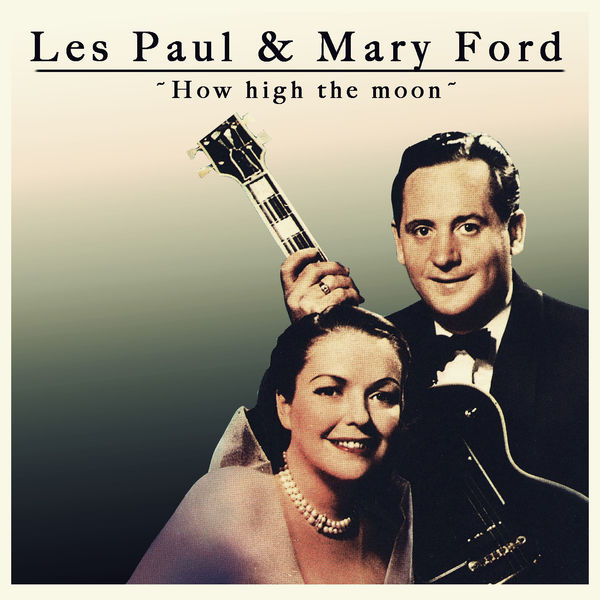
Guitar players know Les Paul by name, due to the popularity of the Les Paul models that Gibson makes. I’m not sure how many of the people who own a Les Paul have ever actually listened to his music.
One of the many innovations that Les Paul came up with, his use of multitrack may be the most important. He didn’t create the invention but he was the first to have one and use it. The idea of multitrack is right in the name, you can overlay different tracks on top of each other. This allows flexibility in recording. For example, you no longer have to record everyone in the band at the same time, a boon for bands who can’t stand the sight of each other anymore. Also, if someone makes a mistake, you don’t have to do the whole song all over again. You can just re-record that part.
It also leads to music becoming a bit more sterile, as the isolation of instrumentation leaves out the bleed of other instruments and the interesting sounds that can happen based on the room one is playing in.
When you listen to this track, “How High the Moon,” I want you to put yourself in the place of a recording musician hearing overdubbing for the first time, and not knowing what that was. How is Les Paul and Mary Ford doing this?
There is a weird transition between the American folk and blues music over to jazz before becoming early rock and roll. How does mainly instrumental swing jazz eventually become vocal rock and roll?
American apartheid.
Jim Crow laws in the US were put in place to legalize racism. Prior to these laws, but post civil war, there were many thriving black communities as the previous barriers of being treated as less than human were gone.
In music, this meant that a black musician could become classically trained and play in the more formal music halls. Once the Jim Crow laws came in, they were barred from performing in these places. Where could they play? With the untrained folk and blues players. Take the musicians who could play complicated classical pieces and combine them with the more dance hall oriented folk and blues players and you get the birth of jazz.
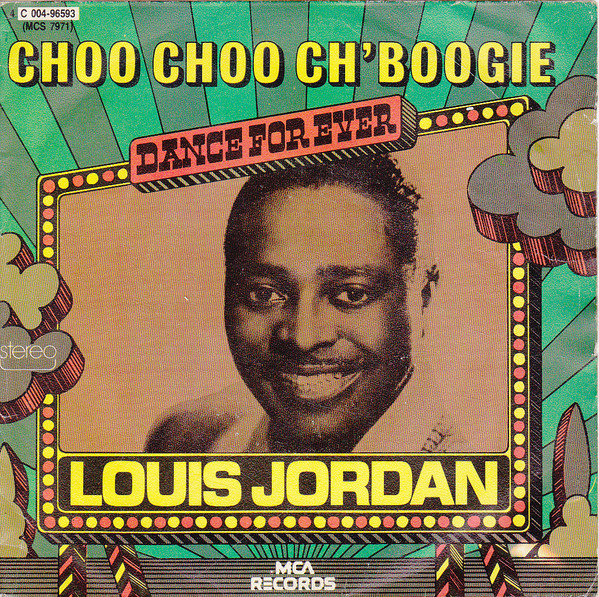
Jump blues is the musical style that is the missing link between jazz and rock and roll, and, in my view, the best of the jump blues is Louis Jordon and his Tympany Five. Jump blues keeps the jazz swing/shuffle but keeps it tighter. There’s more energy than jazz and leaned heavy into amplification when that came along. There was an emphasis on hooks, solos, and vocals. If “Choo Choo Ch’Boogie” doesn’t get your foot tapping, I don’t know what will.
One thing to point out, Jump blues pre-dates the backbeat. You might find yourself feeling like there is one in this song (or if you hear a later recording there may actually be one) but the emphasis is on all four beats, not just two and four.
I have no idea when the first time I head music by Harry Belafonte was. It could very well be his appearance on the Muppet Show or Sesame Street. Knowing about Harry Belafonte and his music feels like something I’ve known as long as I’ve known things.
Often we grow out of music and styles we enjoyed as children, but sometimes that dumb kid we were got it right. Good job kid.
Belafonte took classic folk Calypso music and brought it to folks like me. “Angelina” has a nice shaker rhythm with horns that only hit a few times but knock your socks off. The stop time feel in the verses before the build up to the chorus is fantastic at keeping the song from becoming too repetitive. You also get a section of a lowering of the volume of the chorus before bringing it back up, something rare in popular music in general. I imagine live it was amazing.
Harry Belafonte passed away just a year or two prior to my writing this. He wasn’t young, way past the point of being able to say he died too soon. But, for me, it would have always been too soon.
I didn’t at first. I had a close friend introduce me to 3rd wave and I dismissed it pretty quickly. But hearing a few more bands and recognizing that I was already into some 2nd wave Ska from groups like Madness and The (English) Beat, I came around.
If you’re unfamiliar with the waves of Ska, here’s my take. (As I tell my students all the time, “I may be wrong about everything – except on your exams. There, I am always correct.”)
1st wave Ska is the original music taking place in Jamaica in the, hmm, I’m not sure, 60s seems right. The main components are the use of a syncopated off beat rhythm for the emphasis. Most pop and rock music emphasizes what’s known as the backbeat. If you’re counting 1, 2, 3, 4, the emphasis is on 2 and 4. Before the backbeat became the standard for popular music, the emphasis was either on 1, or on all four counts. Placing the emphasis on 2 and 4, the music gets that driving feeling as it is off of where the pattern begins.
Ska takes that off beat feel and moves it to being off of every beat, generally done by the rhythm guitar. The emphasis would be on the “and” in the following – 1 and 2 and 3 and 4 and… The tempo would be fairly quick as well, though not as quick as much of 3rd wave would take it. Reggae would emerge from 1st wave ska by adding an extra emphasis on the 3 count and keeping the tempo a bit slower. We’ll hear some 1st wave later.
2nd wave Ska was when a few British acts started to incorporate ska sounds into their pop rock music. This is where we get to bands like Madness, The (English) Beat, and The Specials. We’ll hear from all these folks later as well. A key feature of many 2nd wave Ska bands is a complete disdain for any racism. For my fellow Americans who may have forgotten, THIS IS A GOOD THING! RACISM IS BAD!
3rd wave Ska was a meeting of another group that hated racism, punk rock. This didn’t stop skin-head dopes from trying to make punk theirs, but at its core punk rock is the culmination of the rock and roll aesthetic of anyone can do it, so just get to doing it. Plus punk acts like The Clash and The Police (yes early Police was very punk – see Urgh! A Music War) also played and were influenced by Ska.
Save Ferris was a part of the 3rd wave ska and I saw them perform at some ska and punk festival in DC, along with NOFX, Cherry Poppin’ Daddies, and Mighty Mighty Bosstones, to name a few. The name of the festival escapes me, Warp Tour or something like that. I remember Save Ferris the best from that and I particularly remember their playing this cover of the 80s hit “Come On Eileen” by Dexys Midnight Runners.
I had heard of Jonathan Richman as well as The Modern Lovers, but never really listed to them. This song, “Since She Started to Ride,” popped up on something or other and I was smitten. Some might not appreciate my writing this, but so far no other Jonathan Richman song has stuck with me.
I enjoyed the folk country groove, but the lyrics are what sold me. I knew two people growing up that were horse people. One I was related to and later played bass in my post-college Baltimore rock band, the poorly named Sankari.* The second was a high school friend who I was with in marching band. She was cool, friendly, and would clearly much rather be riding a horse.
The lyrics to this song capture the feeling of being around horse-folk. It may be a song about a romantic relationship being lost to a new hobby, but it works just as well without any of the romantic baggage. They’re looking at you and talking to you, but their soul is in the saddle.
*Pronounced something close to Shawn-kree, which was how it would sometimes appear in print for ads where we were playing. Who thought it would be a good idea to name their band something that most people in the US would never be able to pronounce? Oh yeah, me. That may be one of the reasons I’m a philosophy professor now.
Neko Case has a plethora of songs that I would put on this list, but I am trying to limit this to one song per act, though I’ll stretch that from time to time. So which do I pick?
“Deep Red Bells?”
“I Wish I Was The Moon?”
“Margaret Vs Pauline?”
“John Saw That Number?”
“Bad Luck?”
Hell, even picking out selections for a list of songs I’m not using was difficult.
When I teach a course on philosophy and music, their first assignment is to examine “Rag Time” and, without any investigation or research, describe what the song is about. I get a wide variety of answers, often missing the obvious – sometimes a song is exactly what it’s lyrics say. That doesn’t make it shallow. The personal is universal.
“Rag Time” as a track continues past the end of the song which might disrupt the flow of a playlist, so instead I went with the track from the same album that has one of my favorite lyrics:
And it breaks my heart just like the day
That I looked down and I realized
I’ve been sailing so long I’ve become the shore
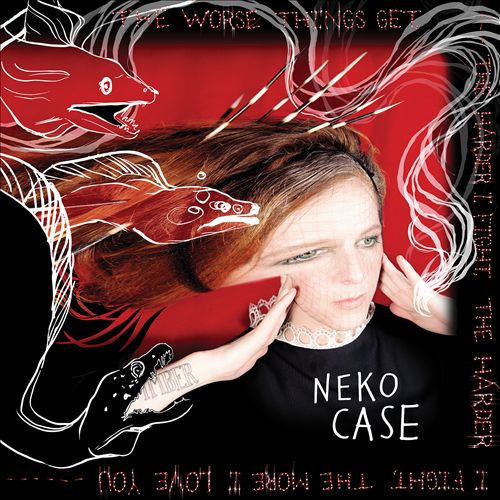
“City Swans” is from the album The Worse Things Get, The Harder I Fight, The Harder I Fight, The More I Love You. Once again, just a touch of western with a slide guitar to fill out the driving guitar riffs that kick off the song. The tom hits in the chorus plays off and builds to the next line in the vocal melody. The breakdown feel of the groove during the lines “sailing so long” is like a rock skimming across the water. All of this adds up to a remarkable track on a remarkable album.
James is the Energizer Bunny of bands, they just keep going and I am so grateful for that. They did take a brief break for about 4 years, but came back and, as of my writing this, recently released their 18th album. They are a band that is absolutely worth exploring their entire catalog.
Their biggest splash in the US was the release of their Laid album, and the track that shared that name. The single went to number 3 on alternative rock charts which, at that time, were really all that mattered. This album was produced by Brian Eno, which is impressive enough, but they decided to do something a bit different. They released a follow up album called Wah Wah that was recorded at the same time as Laid. This album was to show how James worked as a band, improvising and jamming until something came about that didn’t sound like something they had heard before that they could then work into a song. The songs on this album were sparingly edited, and its my understanding that occasionally Tim Booth re-recorded some of the vocals.
If there is a breakthrough song for James, it’s “Sit Down.” Originally, this was released as a non-album single. It was also 8 1/2 minutes long. A minute and a half more and it would have morphed into “In-A-Gadda-Da-Vida,” as all songs of that length do.
A shorter version was re-recorded for their Gold Mother album, which was released as the self-titled James in the US. Great lyrics and vocals with a nice syncopated brushwork swing are highlights of the track.
Stories of when bands realize that they’ve made it are often great, as this is the pinnacle of what they’ve been working for and it’s generally right before it all goes horribly wrong. For James, the story is that at one of their shows after this single was released, when they started playing this song the entire audience sat down. It’s probably one of the few times having an audience sit down on you would bring happy tears to a band.
The Judybats never seemed to crack through to the mainstream in the way that many of us expected. I’ve read many different possibilities as to why, and they could all be correct. Much of it centered around the lead singer, Jeff Heiskell. He’s described some struggles with mental health issues and was wise enough to decide the life of a rock star wasn’t for him. Not, that this was the end of his musical adventures as he eventually started releasing solo albums after the last Judybats album,’00.
The first time I saw the Judybats in concert when they were an opening act for… wow, I really don’t remember! I remember them, though. For an opening act to be the one that sticks with you all this time says something.
I picked up all their albums that I could, including one that was under the band name The Doubter’s Club, who I also saw live in a small club in Baltimore. I’m still missing a bootleg album, Hold Your Horses, but sometimes it’s nice to have something to search for.
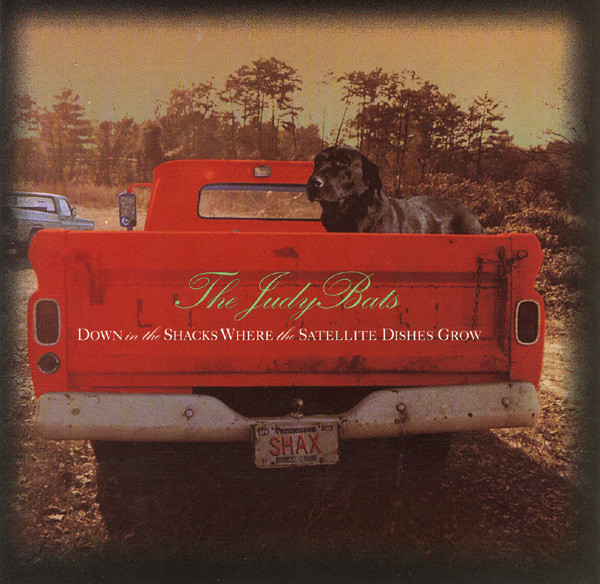
Their music is alt rock with a country vibe to give it a more unique sound. The diminishing of this sound on their fourth album, Full Empty, may have contributed to nothing on that album standing out on its own for a single. Their last album on a major label, Full Empty is still a fantastic album, but its no Down In The Shacks Where The Satellite Dishes Grow, their second album.
The last track on this album, “When Things Get Slow Around Here,” does what I love a last track to do: leave you with a sense of longing.
A slide guitar, a fiddle, and some sparse but appropriate brush work on the drums are highlights of this track. It reminds me of friends I loved that I haven’t seen in decades, making jokes and telling stories, sitting around a table at my house. That wasn’t a common occurrence. Growing up, my house was never the one that people came over to hang out. Those times that they did, just like the Judybats, seem to stick with me a little more.





 Music That Matters (To Me)