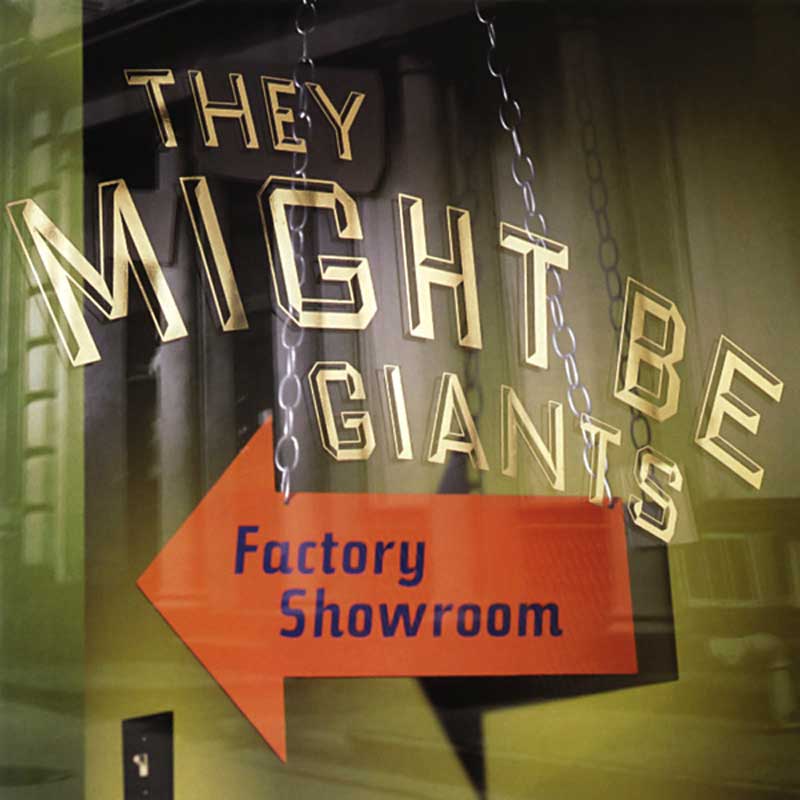
They Might Be Giants is another band with an incredibly rich catalogue. Their songs have appeared all over the place, including their writing the theme song to the TV show Malcom in the Middle. They also have been featured on the kids cartoon Tiny Toons and covered in an episode of Pushing Daisies.
Their biggest hit is likely their cover of “Istanbul (Not Constantinople)” on their album Flood. The best way to describe They Might Be Giants is art-rock-that’s-funny-and-surprisingly-musically-amazing. I think this is sometimes lost on the casual listener, these guys know how to write a song independent of the weirdness. Now, they have honed their song writing ability over the years by running a Dial-a-Song where anyone could call a phone number and hear a new They Might Be Giants song every day. I don’t know when they stopped this practice, but they ran this for years. Heck, it may still be going on somewhere on the internet.
I don’t want to highlight the quirk for this band, that’s easy. Go listen to “Ana Ng” or “The Mesopotamians” for that. I want to highlight an amazing straightforward song that has hints of funk and R&B in a romantic song of two people who seem to be on exactly the same page. “Pet Name” starts with a fantastic bass riff and funk groove before the vocals and piano kick in. The build to the chorus that builds to a lyrical turn that things are how they should be. And this is how a song should be.
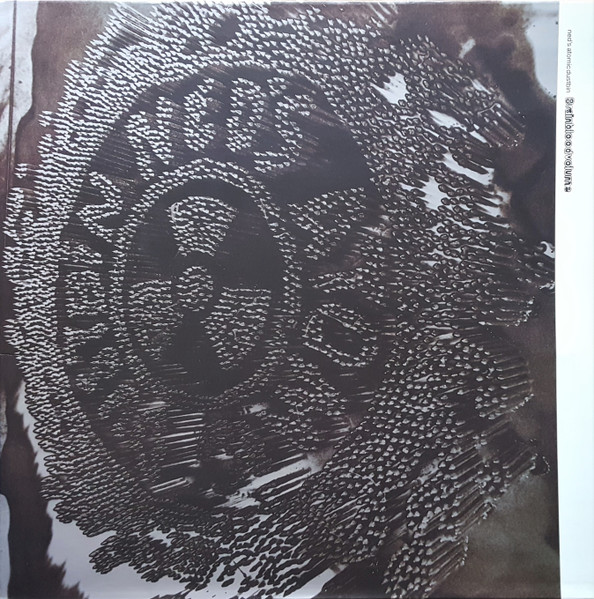
A few years ago, still in the 2020s, I was talking with some students about how happy I was that “kids these days” listened to whatever they wanted without having to be a part of any scene. I was curious if they could place and what they thought of a song, Ned’s Atomic Dustbin’s “Kill Your Television.”
They hadn’t heard the song or the band before, but they nailed it. Pre-grunge alt rock, post 80s. I was talking about when their first album came out, many of us thought this was the future of rock music… Then came Nirvana and Pear Jam and that was that.
Ned’s is really the path not taken. If grunge is the stripping down of heavy metal into something less glam and less pretentious, this is also the path of Ned’s as well. But instead of the lumberjack aesthetic, this was the toxic dystopian aesthetic.
Two things stand out for Ned’s. The first is the use of two bass players, one for the bottom and one filling out melodic lines. It’s imagine that this is a rarity as its hard to have competing bass lines stand out in the mix, but Ned’s does it well.
Their second album did not do as well as the first, the single “Not Sleeping Around” didn’t capture the imagination in the same way that Morrissey’s celibacy worked to his advantage. It’s also not mixed as well as their first album, perhaps just too much compression. It’s like they recorded it with Nerf microphones. It’s still a great album with some fantastic songs. Their third album I skipped entirely until, well, I found out I owned it, about 20+ years after it was released. It took a couple listens but it is also a great album. Given that each album had a diminished audience, not that they don’t have their hard core fans, I wanted to highlight a track from their third album.
One last note on Ned’s Atomic Dustbin, the lead singer’s hair was one of the two guys (the other was the lead singer of Living Color) who had the hair I really, really wanted when I was in high school. Short on the sides and super long bangs. Eventually My bangs were down to my collar bone and it looked great head thrashing.
I remember going to the local supermarket growing up and my mother specifically having us wait in the checkout line that had books rather than candy and other child-pressuring instruments. So, I’d look at the paperbacks with little more interest than it was just something to do.
One paperback title stood out to me: Interview with the Vampire. The title cracked me up. Imagine sitting down with a vampire and having a conversation. It has that mixture we’ve already established I love of darkness and absurd humor. I didn’t know what it was about outside of the title, but I wanted to read it.
As a younger child than the time I’m describing above, I was terrified of vampires. I can remember my earliest nightmare. I was in a crib sleeping ay night when I saw a black and white image of a vampire hand that was going to eat me.* I don’t know if I could speak yet or perhaps only knew a few words, but I did know that I could not speak to explain to my parents what terrified me. It turns out that I will sometimes sleep with my eyes open and then dream something based on what I am literally seeing, such as centipede circling a poster I had on the wall. The hand I was dreaming about in black and white was my own. The dream added the vampire. I spent a long time in my youth sleeping with the blanket covering my ear as I didn’t want a vampire to come in and bite me on my ears so that I could still hear after I died. Gotta love kid logic.
So, there was some hesitation reading this book. But eventually I bought and, read it, and then next two sequels, the three having been published and in paperback by the time I read the first one. I was a fan.
Why am I spending time on Anne Rice’s Vampire Chronicles? That series was pretty formative for me, and fit the (at least wannabe) goth aesthetic I enjoyed. Then, I heard Sting’s Moon Over Bourbon Street, based on Interview with the Vampire. A bit of alt rock/jazz/goth/vampire/sign me up. But Sting wasn’t the only artists to have a song based on these books. Enter Concrete Blonde’s Bloodletting album and the first track “Bloodletting (The Vampire Song).” This album, along with the single “Joey” put Concrete Blonde on the map, but despite this I didn’t really delve any further into their catalogue until decades later. For this list, I went with a track that I immediately loved upon first hearing. The opening guitar riff just rocks in every sense of the word and, while it’s not the gothic scenery found in Bloodletting, still has that tinge of darkness.
Helen of Troy was the “face that launched a thousand ships.” It could well be said that a small rock show in Manchester in 1976 was the show that launched 1000 bands. There are jokes that if everyone who claimed to be at the Lesser Free Trade Hall that night were actually there, the crowd would be in the thousands. The room itself holds less than 200, as far as I know. What has been said with a bit more accuracy was that everyone who was there went out and started their own band.
The Sex Pistols were the first great British punk rock band and, while they had played other gigs, this was the night that made them legends. Now, there wasn’t anything particularly special that they did this night as opposed to any other night they played. There were also not the first punk rock band, there had already been a punk rock scene in New York with Patti Smith (who is really the first punk rocker) and The Ramones. But The Sex Pistols had something that the punk rock bands in New York didn’t – a complete disdain for knowing how to actually play their instruments and yet doing it anyway.
This was the motivation for the bands formed that night. If these guys can do it (not in the sense that they’re so bad) then anyone can do it. The spirit of rock and roll and punk rock in particular centers around the idea that music shouldn’t be only done by those with training. One group that formed from this show was Siouxsie and the Banshees. They’ll have their own track on this list so I’ll talk more about their beginning then.
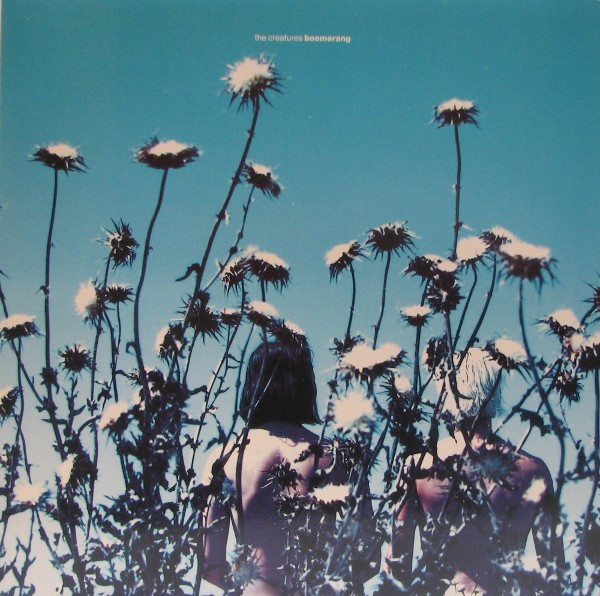
At some point Siouxsie and the Banshees got a drummer named Budgie to join them and at some point after that Siouxsie and Budgie got married. While they were married, they put together a side project that focused on Budgie’s expressive drumming called The Creatures. Their albums are hit and miss style-wise, with some being more electronic than others. The best, and the one that made it so that Budgie became one of my favorite drummers, is Boomerang. This album is a percussion enthusiasts dream. Most tracks are built around the drums for the obvious beat and groove, but also play a significant role in the melodic lines. With “Fury Eyes” we have marimbas carrying the main melodic line with the occasional bells coming in for riffs. I don’t hear any non-percussion instrument in this song outside of Siouxsie’s vocals.
The Platonic Form of a rock band is two guitars, bass, and drums. One of the guitar players or bass guitarist would be on vocals. Four members. They certainly weren’t the first to have such a line up, but they’re influence was such that to have a rock band that didn’t at least have this sort of line up was a novelty.
No, I’m not talking about The Animals here, but rather the group that inspired the first British Invasion – The Crickets.
These days, you’re more likely to find them labeled as Buddy Holly and The Crickets or just Buddy Holly, but at the time they were The Crickets.*
What they were was one of the first real teenagers to sing their own songs to other teenagers. We’ll discuss more about them in the future, but I think it’s important to recognize that the British Invasion is really a bunch of bands, knowingly or not, trying to be The Crickets. Heck, why do you think The Beatles are named after an insect with a silly pun?
The British rock scene prior to the bands that we think of when we think of the British Invasion I’ve heard described as a sort of Cargo Cult. If you’re unfamiliar with that term, an example of it is from island’s in the pacific during WW2 in which a military airbase was established and would drop supplies of goods on the island. After the war, when the supplies stopped coming, the islanders would try to bring them back by imitating the way they saw the military personal behave, such as marching in parades and such. Some even built replica airplanes. There was a disconcert between the actions and the meaning behind the actions. That captures the early British rock scene pretty well. To paraphrase Mark Twain, they knew the words but didn’t know the tune.
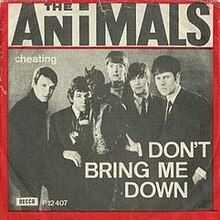
The Beatles changed that. Suddenly they knew the words, the tune, and were writing dissertations on it. The Animals were a band signed and packaged to ride the wave of The Beatles popularity. (The Animals, The Beatles, The Crickets…) That this is a great band with a great song, almost giving us one of the earliest punk rock sounds, would be enough for this write up, but there’s more. Who wrote “Don’t Bring Me Down”? Another duo the were major influences on The Beatles, specifically John and Paul – Carol King and Gerry Goffin.
Prior to the advent of music recordings, the way that people would be able to have music without going to see a live performance was to buy sheet music. The first big American music superstar was Stephen Foster, who wrote songs such as “My Old Kentucky Home” and “Old Folks at Home (Swanee River).” Tin Pan Alley was an area of NYC where the bulk of musical sheet music publishing was found. With the advent of recorded music, there was a shift away from sheet music to being able to buy records and eventually Tin Pan Alley gave way to song writing factories for music that bands would perform and record. Most were found in the Brill Building, and two of the best in the Brill Building were King and Goffin. And yes, it is that Carol King.
The amount of hits they wrote is astounding and you have heard them. To name a few:
The Shirelles “Will You Love Me Tomorrow?”
Little Eva “The Locomotion”
The Monkees “Pleasant Valley Sunday”
Aretha Franklin “(You Make Me Feel) Like A Natural Woman”
I don’t know anything about Jeremy Ivey outside of this song. But, jeesh, this is a hell of a song. By this point you may have noticed that I have a soft spot for country western feels but not country western popular music. I tend to find the pop versions too weak, water downed, and instantly dated sounding for my tastes. I do have to remind myself that it’s not ok to label all of country music in this way. For one, as I mentioned earlier, I’m trying to adopt the attitude that the person who loves the art is correct. Second, it doesn’t matter what type of art or genre you’re interested in, the majority of it is going to be terrible. There are no more bad country songs then there are heavy metal, hip-hop, jazz…
One thing you might want to do with this song is take a look at this and the breakdown of “Crush Story” by Too Much Joy. It’s not a one to one comparison, but there are some interesting cross over for two songs written decades apart and having two different styles, subjects, and feels.
Is this song well known? I have no idea, but I bet it ends up in your rotation.
The only The Waterboys song I’d heard prior to this track is their “Whole of the Moon.” Even with that one, I recognized the song but wouldn’t have been able to tell you who recorded it. But on one of those compilations I seem to pick up from time to time I found “The Soul Singer” and not only is it a great track, it’s hilarious.
If you’ve ever read up on musicians like James Brown or Miles Davis or… well, I’m not going to just make a list of bad people, then you’ll recognize the anecdotes that make up the lyrics. But more than just the humor and truth, the song is a great R&B track in itself.
I’ve tried to listen to more of the Waterboys, but as much as I enjoy artists who attempt a variety of styles of music, I can’t get into much else of theirs. However, if you’re looking for someone attempting this variety, their catalog may be the right fit.
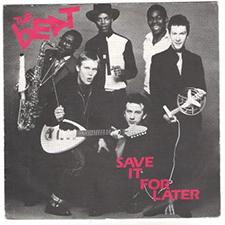
It was just a few posts ago that I discussed bands that had to change their names in the US, and here we are discussing The English Beat, which is just The Beat in the UK. Australia know them as The British Beat and as much as I love alliteration, I like ours better. Maybe for this write-up, I’ll stick with their original name.
Several of their songs are well known 80s standards, such as “Mirror in the Bathroom,” and “Save it for Later” is in that category. So, yeah, odds are you know this song. But let’s talk abut the importance of The Beat. They were one of the earlier representatives of 2nd wave ska or two-tone along with The Specials. Later, members of the two would form a band known as The Special Beat. So cute!
2nd wave ska was when musician in the UK started to take the sounds and styling of original Jamaican ska and combined that with other styles of rock and pop. A main theme of 2nd wave ska was anti-racism, not just with the blending of musical styles but with the musicians playing the music. Given the economic and social turmoils the existed during the Thatcher years in the UK, the music also focused on addressing these ills. This song isn’t really one of those.
Supposedly, this was written before the Beat was even a band but sometime those early songs just have the right, “I-don’t-know-what-I’m-doing-let’s -just-do-what-I-think-is-fun-and-sounds-cool” feel. The Pixies “Here Comes Your Man” is another one of these type of songs. Simple, catchy, and a good representation of the less serious side of 2nd wave.
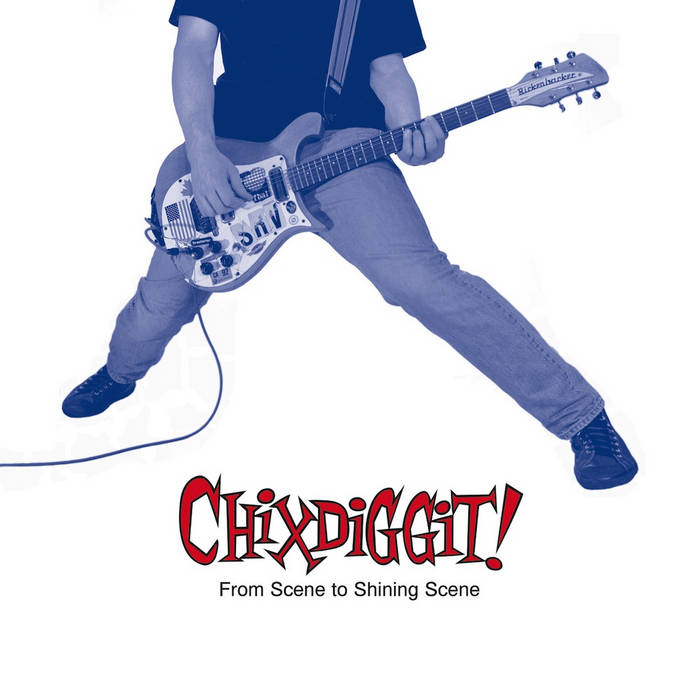
Chixdiggit is a punk pop group I found on various compilations from the label Honest Don’s, which itself was under the larger Fat Wreck Chords label, out in California. There is something so charming about this band, using a basic Ramones punk sound to write some catchy, unpretentious songs.
Following an incomprehensible lines of “The difference between the two/ can fit underneath a hoof and shoe” we get the fantastic self-deprecating “I ain’t so good with analogies” to rhyme with Melissa Louise. Everyone who has a rock band should desire to have a song as tight and as fun as this.
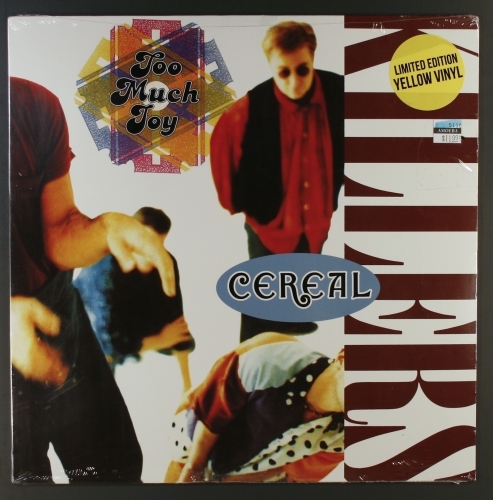
Too Much Joy’s “Crush Story” is pretty close to a perfect alt rock collage pop song. It’s certainly the case that no other song they wrote has come close to the level of popularity as this one. For a song as popular as it was when it was released, if feels a bit lost in time. Similar to the way Iggy Pop’s “Candy” was played non-stop on alt radio, “Crush Story” was ubiquitous and then…
What makes this close to a perfect song?
Let’s break down the sections:
Intro: Great clean guitar riff, then the bass guitar and drums come in with a clock like feel.
Verse 1: Vocals come in following the chord progression but spread out on the repeated last line.
Verse 2: Repeat the form of the first verse same spread and repeat of the lines from the first verse with a small build at the end to move into the pre-chorus.
Pre-chorus: Nice driving distorted guitar taking over the the click of the drums during the intro and the verses. Note the move from being on the beat to off the beat for emphasis on the “fine with me.” It’s hard to make something build above a distorted four beat passage, but the off beat does just that.
Chorus: Good harmonies, good melody, easy to sing along with, but lots of vocal parts happening.
Small Bridge back to the verses, but now with more guitar riffs.
Verse 3: More guitar than the first two verses, and no fourth verse.
Pre-chorus: Repeats the pre-chorus/chorus from earlier.
Breakdown: Clock like drums with an emphasis on the bass moving the melody
Bridge: Heavy distorted guitar with an emphasis on a slight funk groove on the drums – a mix of heavy metal and alt rock.
Pre-chorus: But heavier than before with more organ and crash cymbals on 2 and 4.
Chorus: Again, builds on what came before and is now intertwined with the pre-chorus going back and forth between the two.
Fade out.
What makes it an almost perfect song? I don’t think the fade out does it any favors and while I am a fan of the oddity of the main vocals in a few parts, I can imagine it might not be that appealing for some.


 Music That Matters (To Me)