A Spotify Playlist Companion

  • 45 Durand Jones and The Indications “Morning in America”

    Category mistakes are the result of language having words with multiple meanings or homophones. For example, if I told you I went to the bank, you might assume I’m at the ATM. In reality I’m standing by a river contemplating Heraclitus. That bank can mean a financial institute or the side of a river (or a type of shot in pool or a way to steer a boat…) Using bank in the wrong sense is a category mistake. 

    There are plenty of jokes that use category mistakes for their punchline. Steven Wright has a joke that goes something like this: “I just finished reading the dictionary. Turns out the Zebra did it.” 

    I know that explaining a joke ruins it, so I’ll let you figure out the category mistake on your own here. Puns, sometimes called the lowest form of humor, can often be category mistakes. So these errors produce humor and confusion. Every once in a while they can also produce something more.

    Durand Jones and The Indications’ “Morning in America” is a play on a few things. First it was a conservative political ad slogan, specifically for Regan’s second term. It references how things had just started to get better under Regan’s administration, that things had turned a corner for prosperity. For folks like Durnad Jones, this was a sick joke that seems to just keep going. So the category mistake here is a reference to not just morning, but of the homophone, mourning. The songs from 2019, but it feels like a timeless R&B track. 
  • 44 The New Pornographers “The Bleeding Heart Show”

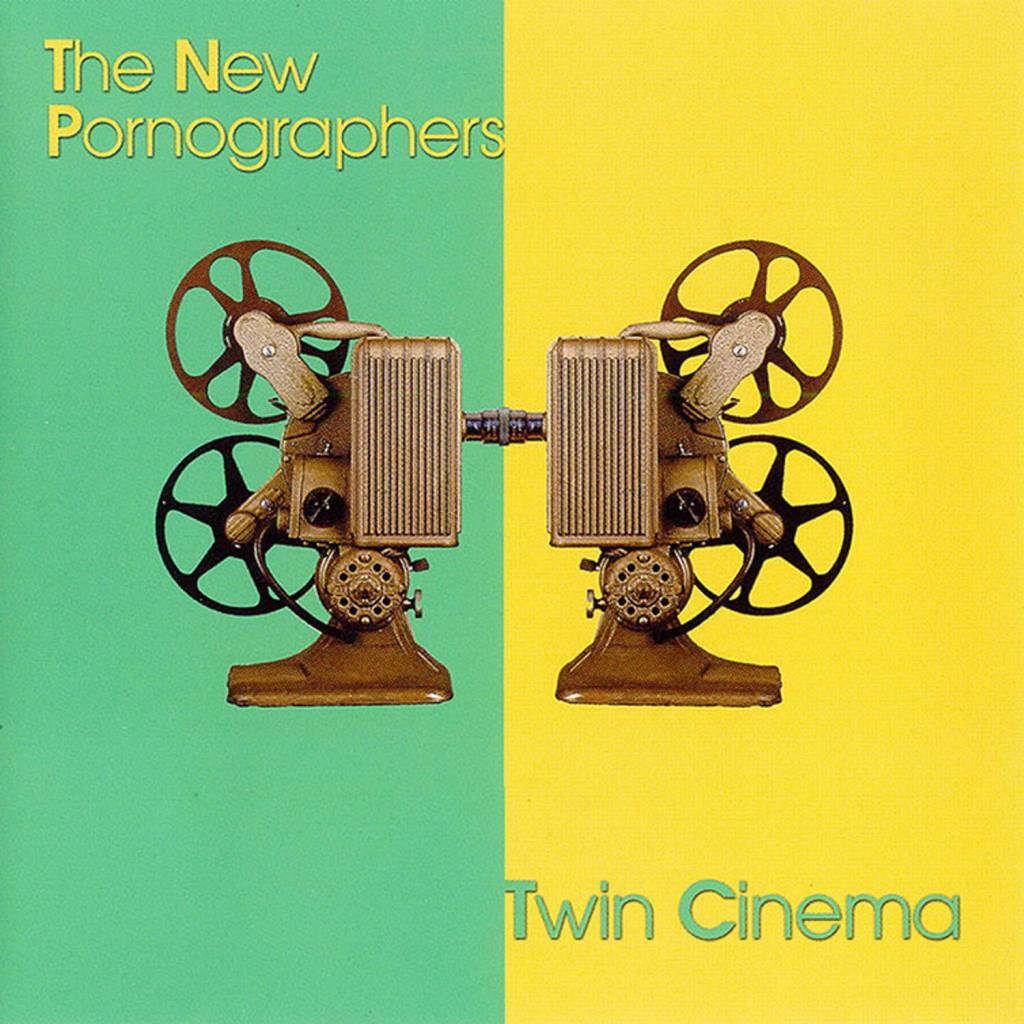
    The New Pornographers were a band that, surprise surprise, I found on a compilation. The first song of theirs I heard was “The Laws Have Changed” and I remember not thinking much of it at first. I liked the tempo and I liked the vocals, but it felt stilted and confusing. But there was something that kept me coming back to the song and after a few more listens I though I needed to hear more of this group. 

    I grabbed the album this song was on, Electric Version, and popped it in and pretty much felt the same way I did when listening to that first song. But enough tracks, specifically “From Blown Speakers” and “All For Swinging You Around,” had enough to keep me going back to it to let it grow on me and the same thing happened. 

    I’ve mentioned before that one of the things about certain art, music in particular, works best when it has the combination of repetition/familiarity with the occasional novelty/surprise. When you have this sort of balance to work with, you can slide in one way more than another – do you opt for more surprise or more familiarity? Most opt for just a few new/odd bits, if any. The New Pornographers slide towards more novelty and so it can take some time to have that turn to some level of the familiar. 

    “The Bleeding Heart Show” is not one of their oddest, though it does have it’s own twist on the building song – a song that starts simple and adds complexity through additional instruments, increasing what the instruments are playing, or increasing the accented beat. This song does it all. By the time you hit the final part where everyone is just wailing on their instruments and vocals it is impressive.  It really is a song broken into three parts with each part having its own feel, vocal style, and lyrical changes. Yet, the whole doesn’t feel like three separate songs, but one in incredible piece. 

    Oh, and Neko Case is in this group? What? Yep, turns out that this is an indie-supergroup made up of folks with their own successful acts. 

  • 43 Ben Folds “Zac and Sara”

    The Ben Folds Five was a big deal when I was working the record store, though it never caught my attention. Frankly, the folks who were buying it didn’t seem to me to have the most discerning taste and at best it sounded like a Joe Jackson cover band. This is, of course, unfair for two reasons. The first is that even if they were a Joe Jackson cover band that would be amazing. Second, Ben Folds is not just a Joe Jackson wannabe. I mean, there’s a clear connection between the two styles of pop piano song writing, but Ben Folds can certainly stand on his own. 

    My first real introduction to Ben Folds was his solo album Rockin’ The Suburbs. My cousin, who played bass in our band, gave me a burned copy of the cd when burning cds were a new thing. The copy came in alphabetical song order and was missing the song I chose for this list, “Zac and Sara.”

    I imagine my reaction was one of incredulity, but she said I really need to listen to it. She was right, it was great. A collection of songs that sounded like they were recorded in whatever room the cover of the album was taken, this lent it an air of authenticity – an “I’m going to do what I want how I want to” that I find appealing.

    Years later, I tracked down my own copy of the album and found there was a track I didn’t know about, and it was the second track on the album. Apparently the burned cd couldn’t handle songs that started with z. It’s a great pop song, up tempo, with the piano part playing the general background while synths and backing vocals are layered to fill out the sound. 

    It also captures a scene of this young couple hanging out in a guitar shop so well. You get a handle on both of them, particularly Sara, with just a few lines and the description of the guitar shop being like a submarine is pretty spot on for many shops. 

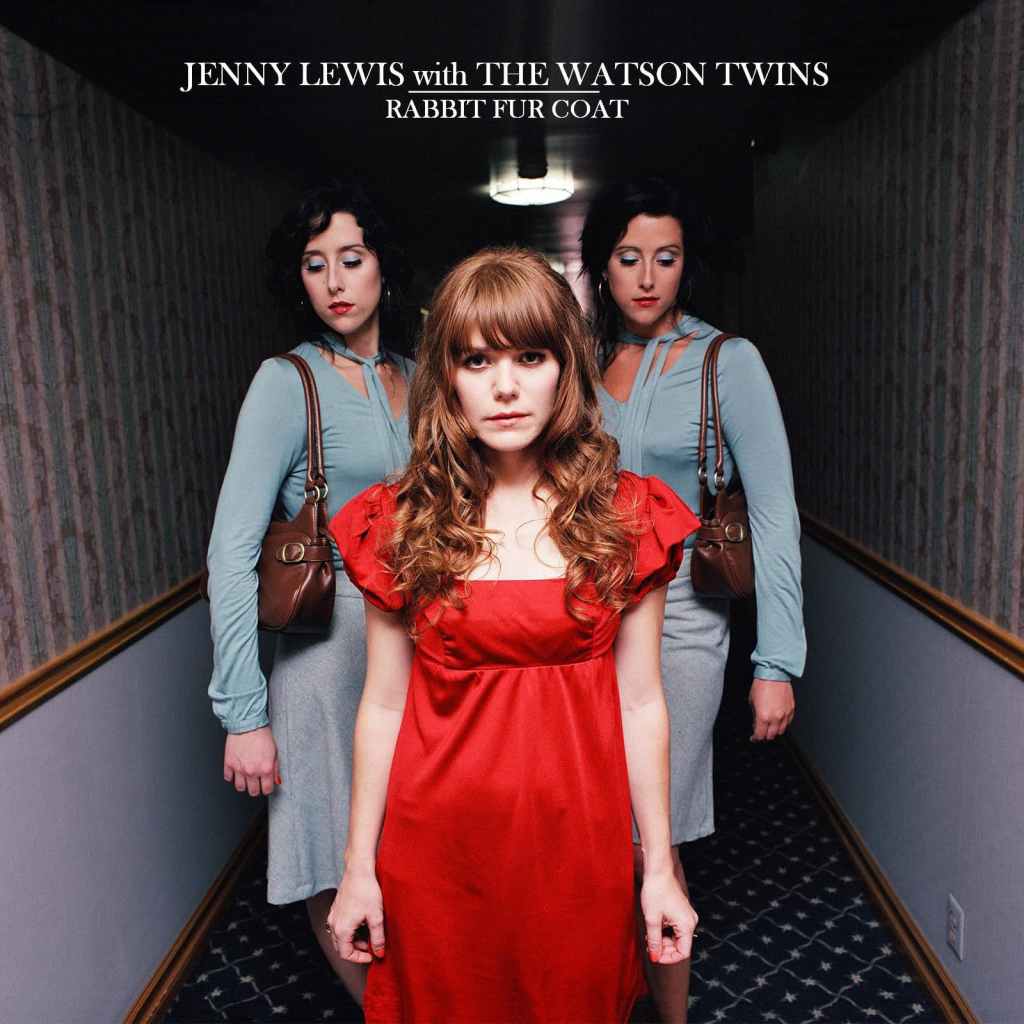
  • 42 Jenny Lewis and The Watson Twins “The Big Guns”

    Jenny Lewis and The Watson Twins’ “The Big Guns” popped up on some compilation or random stream and onto my favorites it went. I hadn’t heard of her before, though the name sounded familiar. I think that’s because Jenny Lewis is a name that just sounds familiar. I’m not at all familiar with The Watson Twins. From the album Rabbit Fur Coat, my assumption is they are a folk duo/group that got Jenny Lewis to collaborate with.

    It starts with an uptempo folk guitar chord progression with some acoustic noodling before the lyrics start. We have a full round of verse/build/chorus before the anthem style 4 on the floor bass drum kicks in. The build this round brings everything back down to a quieter feel before the chorus kicks it back up. It’s an all around great folk-pop song. 

    We’ll talk about Jenny Lewis more when we get to The Postal Service. 

  • 41 Old 97’s “Murder (Or A Heart Attack)”

    Is there another band that has danced around mainstream success more than the Old 97’s? I hadn’t heard of them before a friend introduced me to them. This wouldn’t have been such a big deal if it happened now, but this was around the time I was working at a record store and I hadn’t heard of them. But their songs appear on all sorts of things. I’m sure I heard them on Scrubs, Ed, or The Dre Carey Show. They were the alien band in the Guardians of the Galaxy Holiday Special! How can they sort of be everywhere and not be a name like Coldplay or Death Cab for Cutie?

    If you’re not familiar with them, they’re one of the earliest of the alt-country bands, and maybe that’s it. Not country enough for the country crowd, not alt enough for the alternative crowd? I have a hard time going with that as the reason since their music is just too good in and if itself. 

    One of their earliest hits (on the alt charts) is also the first song I remember hearing and digging. It has a nice mix of rock and tex-mex western. The topic isn’t the happiest, though I choose to believe that the songs stops because there is a happy reunion. The plot: The singer accidentally left the back door open and their dog ran away. Until the dog comes home, the back door stays open. 

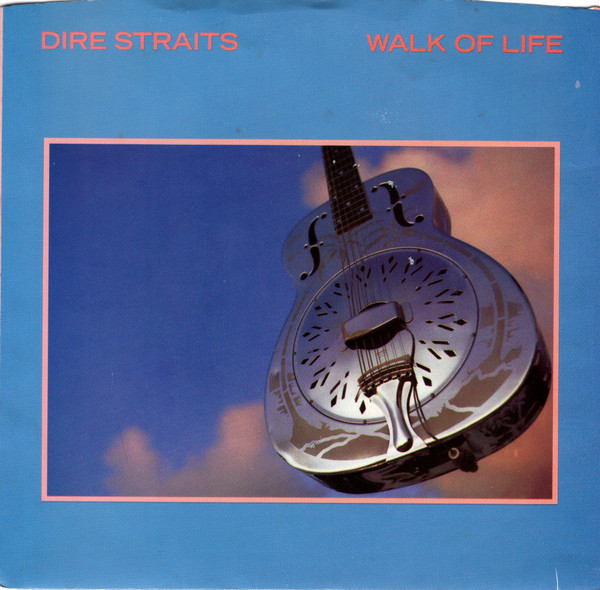
  • 40 Dire Straits “Walk of Life”

    I love this song. I didn’t know what it was about for a long time, as I didn’t pay much attention to the lyrics. But that organ intro, and then an organ hook on top of the organ intro, and then the rockabilly guitar kicks in with the drums. Whoo-hoo indeed. 

    There are several common themes to early rock and roll:

    1. Love

    2. Dancing

    3. Cars

    4. Mythic guitar players

    Rock and Roll starts with Elvis Presley, Chuck Berry, and Little Richard and one of the earliest rock and roll songs is Chuck Berry’s Johnny B Goode with one of the most famous guitar riffs of all time. The song tells the story of the eponymous Johnny’s otherworldly self taught guitar playing. Since then, there are a plethora of songs about guitar players and guitars, from David Bowies’ “Ziggy Stardust” to Amy Winehouse’s “Cherry.”

    “Walk of Life” is the story of Johnny (because of course that’s his name) the busker playing his guitar in the tunnels. It name checks several songs that Johnny plays, from “My Sweet Lovin’ Woman” by Robert Nighthawk and “Mack the Knife” by Kurt Weill but popularized in the US by Louis Armstrong. There are so many songs mentioned that I was convinced for a bit that “Walk of Life” is a reference to an older song I didn’t recognize. Nope. Maybe it’s a Johnny original? Maybe this song is the “Walk of Life” he’s playing? Meta rock and roll! A rock and roll nesting doll.

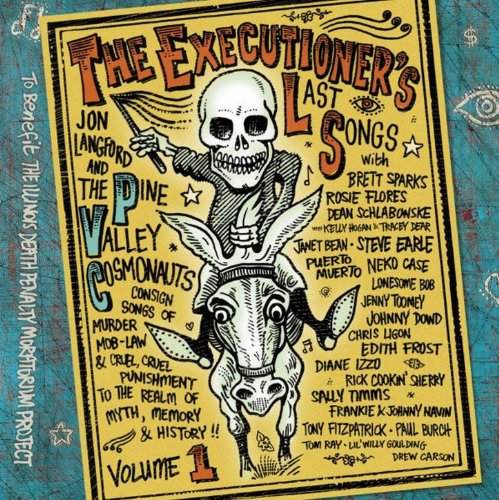
  • 39 Jenny Toomey and the Pine Valley Cosmonauts “Miss Otis Regrets”

    If I have a chance to included another Jenny Toomey song on this list, I’m going to do it. The general rule is one song per act, and since this is with the Pine Valley Cosmonauts I’m counting this as a different act. Yay!

    “Miss Otis Regrets” is a classic song by Cole Porter, the story of a butler relaying to a visitor about why Miss Otis cannot meet for lunch. It’s supposed to be darkly humorous. I’m not sure this tempo and feel lends itself to the humor, but it certainly captures the dark. 

  • 38 Beth Orton “Central Reservation The Then Again Version”

    What do you mean Beth Orton isn’t a electronic dance artist?

    The first song I heard of Beth Orton was The Chemical Brothers remix of her “Central Reservation” which is the chosen track for this list. Most of the time, when you have a remix of a song it is, at best, just a longer extension of the original. Most of the time it is a DJ or other artist taking the song, removing a bunch of the vocals, moving parts around, and adding some electronic beat that fundamentally doesn’t fit the song. This is fine for dance clubs, but rarely-rarely-is the remix better than the original.

    When I teach my Philosophy and Music course and we cover songwriting, I liken the process to sculpting.* There is this block of material and all you’re doing is removing the parts of the block that are not a part of the sculpture. The piece is there, you just need to bring it out.

    You might think that music writing would be different, more like painting – adding different sounds until you have the complete picture. But I find that once you have the block of noise, the other parts are there behind the sound. This may be the fundamental problem with remixes, they’re painting, not sculpting.

    This remix is too good to be a remix. In many ways, this is the way the song should be. So much that I had this in my brain as the general sound of Beth Orton. Later, when I heard her albums, I was disappointed. But, that’s not fair. Disappointment should not be attached to Beth Orton. Her albums are very, very good. They’re just more folk and jazz-esque.

    *Of course I’m not speaking for every songwriter, nor every sculptor for that matter.

  • 37 Okkervil River “Lost Coastlines”

    Okkervil River is a band out of Austin, Texas, the only place I’ve been that’s not on the East Coast, and are mainstays of the indie/alt rock scene. I found them, again, on some compilation or other and I can sort of see why they haven’t broken through to the mainstream. I hope that’s the way they like it, and I wouldn’t blame them for that. They write some of the best and worst songs. The music is some of the best and the worst. The vocals are sometimes the best and sometimes the worst. They are A Tale of Two Cities in rock band form. 

    “Lost Coastlines,” from their Album The Stand Ins, is one of their best. A double rhythm guitar part giving the basic groove and movement to the track is mirrored in the use of two separate octaves for the vocals, higher in the verse and then lower in the build to a chorus that doesn’t actually come. Before you know it, you’re back at the next verse. 

    I remember Steve Martin describing his comedy writing around the time he was doing his ‘wild-and-crazy-man” routine about the use of increasing tension and release. Most joke style comedy is the increase of tension until you get to the punchline where there is the release, usually with laughter. His idea was to just keep ratcheting up the tension with no release to see what would happen. What he found was people would release on their own at different points. 

    Music is similar, there is the increase of tension, either through the groove or repetition of the rhythm section or the verses. This can be increased through a small build before the release of the chorus. What happens when you don’t have a chorus? Most of the time nothing, as it usually wasn’t an interesting build to begin with. But I think “Lost Coastlines” nails the Steve Martin comedic theory. 

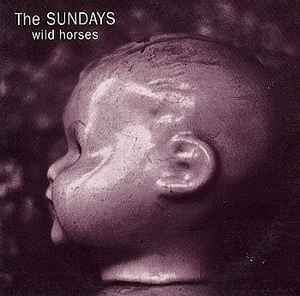
  • 36 The Sundays “Wild Horses”

    My introduction to The Sundays is likely the same as most, I heard “Here’s Where The Story Ends” and loved it. Though it did sound familiar…

    Now, there’s nothing wrong with songs sounding like other songs, taking inspiration from parts and blending them together in new ways. There may be an argument for ownership of music compositions, but I lean towards having things be more open to be used, changed, and progressed. So, I don’t want you to think that I’m knocking The Sunday’s biggest hit. I’m not. It’s a fantastic song. Go listen to it. 

    Now listen to The Smiths “Cemetery Gates.” 

    I imagine it happened something like this:

    Guitar player sitting on their amp just noodling, playing some chords and eventually starts playing “Cemetery Gates.” Another band member is like, “Wait, that sounds cool, keep doing that.” The drummer nods and starts playing along and before you know it, they have a new song. Guitar player looks side to side and hopes no one notices or cares.

    That’s one way it could have gone. It could have just been a complete accident. At least two of my earliest songs that I thought were completely original were based on OMD and The Judybats songs. I didn’t realize it until many years later. 

    But since we’re talking about songs sounding like other folks songs, why not take it a step further to a full blown cover: The Rolling Stones “Wild Horses.” 

    There’s not much difference between the feel of the two songs, perhaps Mick Jagger’s vocals have a little more purposeful clumsiness to them, a bit more of that 70s grit. But of the two, I prefer The Sundays version.