Every once in a while I discover a song and think that no one else knows it. One reason for this is that I never listened to the radio after high school. I would get recommendations from friends, seeing bands play, and indie magazines. This is, of course, silly and led to embarrassing moments such as my being shocked that other people had heard of Wilco’s “I Am Trying To Break Your Heart.” Don’t get me started on “Hey Ya!”
Black Puma’s “Colors” may have been another one if I hadn’t kept my mouth shut.
The first time I heard it, I assumed it was a classic R&B track from the 60s that was a hidden gem (to me.) The sounds are so authentic that I’d put money that the mics are at least vintage. At least a dollar.
It starts with a small riff on an acoustic guitar and swelling organ. The vocals kick in with a piano and simple bass drum coupled with clap/rim click on the snare and minimal hi-hat. Notice how the build to the has even more organ kick in. It’s a subtle increase to the chorus which sets the groove. And just when you think the song has settled into it’s groove with the chorus, the chorus is repeated and extended with even more instrumentation.
Popular music, maybe since Phil Spector’s Wall of Sound, does not do much experimentation with sound dynamics. The volume tends to stay at the same level and at best it’s the introduction and removal of instruments that offers any real differences. Typically, that doesn’t do as much for the feel compared to a song which actually changes the volume dynamics, such as the Violent Femmes “Blister in the Sun.”
I feel like the Black Pumas’ “Colors” manages to take the instrumentation version of sound dynamics and manage to make it have the same impact as songs that have the musicians play softer and louder for that dynamic range.
Every musical move, every instrument’s introduction, every additional vocal is just perfect. So, for everyone familiar with the song and wondering what’s wrong with me, just put it on your head phones and time how long before you head starts doing the nodding groove.
There are acts that share names, though it tends to be rare that one of them doesn’t adjust. The Charlatans are known as The Charlatans UK over here in the US because, well, there was already a The Charlatans dating back to the 60s. Yazoo is known as Yaz in the US. The Mission UK… The English Beat…
There are several more contemporary acts that have taken up the name Belly which makes the selections that show up on AI playlists and search engines unpleasant. I usually don’t mind, after all there was already a Tsunami heavy metal band before the indie band that I adore. But Belly was important and I worry that folks latching on to this name are missing that importance.
Belly was founded by Tanya Donelly after co-founding Throwing Muses with Kristen Hersh, who continued on with that band, and The Breeders with Kim Deal, who continued on with that band as well as with the Pixies. The first album, Star, landed big, sold a ton, and was nominated for two Grammys. (Not that the Grammys are any indication of an act being good, but in this case the album was too good to ignore.)
Their second album, King, did not do as well. I believe I was working at a record store at the time and remember thinking that it was missing that something special the first album had. I think the missing bit was the odd, short, almost ambient songs that were placed sporadically throughout Star. King was just a straightforward alt rock album. Now, having said that, King is fantastic. But, the low sales led to the band breaking up and Donelly going solo. I’ll tell you about one of my greatest regrets when we cover one of her solo works.
Something kept Belly in people’s minds, though, and sometime in the early 2000s a Best of album was released that included some unreleased tracks. Well, I think they were unreleased, I hadn’t heard them before. In 2016, the got back together and ran a crowdfunding for a new album, Dove. This makes three remarkable albums even if it works out to less than one a decade.
I wanted to choose a track off of Dove for this playlist to show how good the music of Belly still is, but for some reason Spotify does not have Dove.
Sigh.
Instead, enjoy a track from King, “Now They’ll Sleep, ” and go out and track down Dove for “Stars Align.”
Asian Man Records is a wonderful small label run by Mike Park in California. They specialize in punk and ska and for being a small indie label have had some remarkable bands, many which will make an appearance on this playlist.
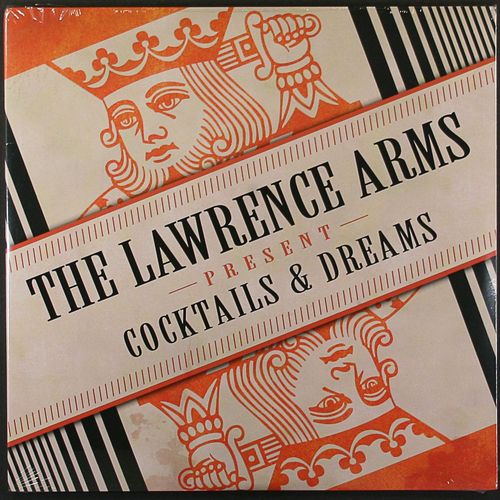
I first came to know about Asian Man Records from their compilation albums, Mailorder is Fun!,Mailorder is Still Fun!, and Mailorder For The Masses. The third compilation is where I found The Lawrence Arms “Quincentuple Your Money.” They sounded familiar to me, and it turns out that they shared a common sound with an early 90s punk ska band, Slapstick. Slapstick has an almost mythical quality, influence, and legacy about them reminiscent of Operation Ivy.
“Quincentuple Your Money” has a wonderful melodic opening on the bass, before Brendan Kelly’s scruffy vocals kick in with the first verse. The lyrics are interesting and certainly paint some mental images, though I’m not sure if there is a coherent story being told. But each verse certainly captures punk themes, from anti-war to self- deprecation. In particular I enjoy the lyrics of the stop time midway through the song:
There’s a park in the city where I used to go
But now it’s covered with fences and cops and light posts
“Every Elvis has his army” sang Elvis Costello, but as influential and important as Elvis Costello, Elvis Presley will always be the Elvis.
There are only a few artists that can have a whole industry devoted to them, and really only the Beatles can compare. But the idea of the artist Elvis carries so much baggage, it’s hard to get to what made him so remarkable to begin with.
I posted earlier that Little Richard and Elvis Presley had a similar story with their first recording sessions. The similarity is found when both session were going nowhere and were really quite boring. But on a break, when the pressure of making something impactful and permanent was removed, real music was found.
Elvis had stopped by Sun Records to record a little song for his mother, supposedly for her birthday. He had a nice enough voice and, more importantly, a mannerism to his performance that showed he wasn’t stuck in one particular type of music, i.e., he listened and took inspiration from both “hillbilly” (later renamed to Country music) and “race” (Later renamed to Rhythm and Blues) music, showing us that once again history is full of horrible things.
This is prime time for American apartheid, and segregation was the law in the south. Enforcement of segregation went beyond bathrooms and diners, but included the culture one was often allowed to partake in. Elvis grew up in this time, but thanks in no small part to his mother allowing him to listen and engage with whatever music he was interested in, his career took a much different path than folks like Pat Boone. When you look at that time period, the history of what led to rock and roll, and then pictures of Elvis, you might get the idea that here is another white person stealing music from black artists. This was not the case with Elvis. He always credited the artists who created the songs he sang and encouraged his listeners to go and find the original black artists and recordings. Does this give everything a pass? No. “Elvis was a hero to most, but he didn’t mean shit to me,” is still a relevant lyric in Public Enemy’s “Fight the Power.” Institutional racism may well be a factor in Elvis’ success, but individual racism doesn’t really fit with the way he conducted himself.
Back to Sun records…
The story is that Sam Phillips believed he could solve all racism in the US if he could find an artist that could be white but sing like the black artists. There is so much wrong with that proceeding sentence I don’t even know where to begin. Sam Philips was like that. During the Cuban missile crisis in the 60s, he thought he could solve it all if he could just talk with Castro, so he called Cuba. He didn’t manage to speak to Castro, but he did talk to Castro’s brother. Needless to say, it didn’t help.
Elvis was brought to him by Marion Keisker who worked with Phillips at Sun records as the sound he was looking for. So, Phillips brought him in to record with Scotty Moore on guitar and Bill Black on Bass (no drummer) and it was dull, dull, dull.
Until there was a break. Phillips started winding up some tape, the trio were fooling around by the soda machine, and Elvis picked up an acoustic guitar and started banging out a version of a blues song “That’s All Right (Mama)” by Arthur “Big Boy” Crudup. Phillips knew the song, but how did this kid know it? And what was he doing to it?
He told the trio to figure out where to start so that he could record it as a song. They then needed another side, and so they decided on “Blue Moon of Kentucky” a waltz by Bill Monroe. And Elvis messed with that song too, making it an uptempo blues song in 4/4. I’m not going to use either of those for this playlist, but they’re worth your time to listen to the originals and then listen to what Elvis did to them.
The song I chose for this is “(Marie’s the Name) His Latest Flame.” Why? For one, I really love when The Smiths played this as the intro to their song “Rusholme Ruffians” on their live album Rank. Second, it’s a great track. It utilizes the Bo Diddly beat to a nice effect.* It’s also, to my listening ears, the closest that Elvis ever got to capturing the early magic of those Sun recordings after he stopped recording with Sam Phillips.
*If you’re unsure what the Bo Diddly beat is, well, it’s the drum groove in the verses of this song. We’ll also cover Bo Diddly later and go into the beat in more detail then. My homework now? I have to figure out how to use language to describe a beat…
Suzanne Vega is an artist that I always forget how much I like until I hear a song pop on. I rarely skip her on shuffle, but my forgetfulness means I don’t have as much background about her on the tip of my mind. In case I haven’t mentioned it before, I try to do limited to no research for these, as I want it to represent what I’m thinking about or what stands out to me for these songs. I believe she started as an acoustic solo artist before getting signed to a label, but that’s about it. Probably the first time I heard her was on the Pretty in Pink soundtrack.
So, let’s look at the song. We have an fairly uptempo acoustic guitar driving the piece with drums acting less as straight forward time keeping, but with off-beat emphasis reminiscence of a latin groove, though I don’t see it as a danceable one. Of course, I learned to play guitar so I wouldn’t have to dance, so what do I know?
There is an electric guitar that has a prominent solo in the middle of the song and that helps with the breakdown end of the chorus. We also have something that we don’t really get in many pop/rock songs, especially post 80s, a key shift. Key shifts are when you change the basic “key” of the piece of music, that is, what notes sound right together in the piece.
Let’s say you have a set of notes that sound good together, usually described as a scale of some name or sort. Let’s call this first set C. Then, there is another set of notes that sound good together, another scale, let’s call that one E. Now, the notes in set C and the notes in set E may have some notes in common, but you can’t use the entire set from C and the entire set of E at the same time without it sounding, well, weird. Weird may be what you want, but that’s not something that would fit with a key change. So switching the set of notes C with the set of notes E while keeping the same tempo, melodic spacing, and so on, is a key change. The feel of a key change is one of jumping in sound.*
Similar to Peter Murphy’s “Crystal Wrist,” there’s a repetitive lyrical structure with a breakdown at the end of the chorus. The word choice is not something you’ll need a thesaurus for, but the lyrics and rhymes have a syncopation to them that make them a delight to follow along with. I can picture Marlene’s mocking smile every time, even without a music video.
*Trying to write about sound is difficult, but it’s kind of amazing that we can use terms like “jumping” and understand what that means even though there is nothing actually like jumping in the music.
Billy Bragg is not that big in the US, but is known for carrying the political dissent folk voice from artists like Woody Guthrie and Bob Dylan. One thing that makes him stand out was his use of an electric guitar instead of an acoustic guitar when performing solo.
Electric guitars are louder, obviously, but in some ways more empty sounding than an acoustic. You can add all sorts of effects, from tremolo to reverb to distortion, but much like the difference between digital music and vinyl, there’s a warmth that’s missing. Of any artists to just use an electric guitar for their music, I think Bragg does it the best. Check out his song “A New England” for an example of this.
This is not to say he doesn’t include a band from time to time. The earliest song I remember of his was “Waiting for the Great Leap Forward” which slowly adds instruments as the song builds to a terrific end. As a Star Trek fan, it was his cry of “Beam me up, Scotty!” that stuck in my head.
The song I chose for this playlist, “St. Monday” by Billy Bragg and the Blokes, is an anthem for a four-day work week. I admit, I’ve never had a typical job. My earliest jobs were often in retail: I worked in a shoe store to pay for college, in a frozen yogurt shop, in a record store, a t-shirt cart, a hat store, a book store, a big box hardware store where I got a forklift license, and a generic big box store. Beyond those, I had my own photography business for a brief period of time, I wrote and taught half-time shows for a high school marching band (the field designs and the drum score), was a substitute teacher where I ended up as a permanent sub for the weight training courses (when offered the job they said they’d like me to do it, but I had to stop dressing like Elvis) and worked as an adjunct professor before landing a permanent position teaching philosophy.
Retail jobs have crazy, weird hours. Public school teaching jobs stop in the summer, and teaching college classes depends on when the classes are scheduled. As I tell folks, “I didn’t go into jazz, rock and roll, and philosophy to get up early.” Bragg’s “I Ain’t working on a Monday” just speaks to me.
We’ve already heard a track by David Byrne in the first five songs of this playlist, and we’ll hear some more later. I have a self-imposed rule that I will only do one song per act, but those artists who are in multiple groups and collaborations can have each of those count as an act. Here we have a collaboration of David Byrne with Brian Eno.
Brian Eno may be one of the most important musical producers for the popular music that influenced my own pop rock writing. The earliest I know of Eno is with his stint playing in Roxy Music, who will surely make an appearance in this playlist at some point. I first discussed Eno when we looked at James and I described the duo recording of their albums Laid and Wah-Wah. Eno also produced albums by Talking Heads, U2, Peter Gabriel, Devo… you most certainly know songs he produced.
Eno’s known for his unconventional approach to music, such as having a box of different words to pull out to inspire a new direction in the music. For example, and perhaps not a real example, if a song isn’t working he might reach in and pull out the word “water” and then ask the musicians to make their music sound more “watery.” There may not be an agreed upon idea of what watery music sounds like, or even if there is such a thing, but the idea is a good one – think about this differently, but not just an empty idea of different. It’s hard to argue with the results.
With Everything That Happens Will Happen Today, Eno joins directly in the making of the music, instead of just producing. It’s a wonderful album full of some of the best work Byrne had done since his first two solo albums. An uplifting mid tempo song, it manages to be optimistic and melancholy at the same time.
There is an a cappella version of this song that was a part of his American Utopia Broadway show/concert. If you haven’t had a chance to see the movie made from that show, you should. Directed by Spike Lee, it takes the idea of how a band is often filled with musicians hidden behind their instruments and removes that. The first time I watched it, I couldn’t take my eyes off the screen.
I knew that Steve Martin played the banjo, just like I knew that Kermit the Frog played the banjo. But one’s a comedian and one’s a muppet, so how good can either one really be?
It turns out that in Steve Martin’s case, very, very good.
This collaboration between Edie Brickell on vocals and Steve Martin, made me go out and get a banjo. I’m not that good. I can bust out a pretty neat version of “When the Saints Go Marching In,” but that’s about it for now.
“When you get to Asheville” is the first song on the album Love has Come For You and it’s a spectacular album. Of particular note on this song is the use of email as a notification/communication device. There’s nothing weird about that, email has been around for decades, but its use in music often sticks out in an oft-putting way. Popular music has a long history of letters (“Wait a minute, Mr. Postman…”) and phone calls (“Don’t leave me hanging on the telephone…”), but email?
This is the first track I ever heard that managed to take the concept of email and infuse it with the longing for direct communication and connection with another found in those previous songs using letters and phone calls. A great opening track on a great album.
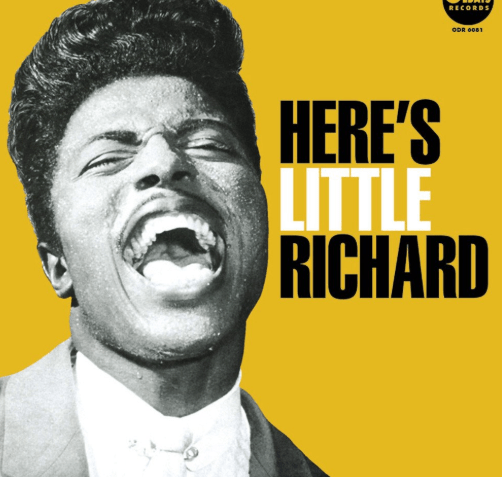
Little Richard is known as the architect of Rock and Roll, and aside from folks like Louis Armstrong who set the basic format for popular song structure, it’s an apt title.
Little Richard’s life is wild and filled with a lot of angst. I’m certainly not going to label his sexuality if he doesn’t, but I will say that he viewed himself as a sinner for it. Several times in his career, he abandoned rock and roll for being “Devil’s music” before coming back to it again. I can’t imagine living with that much inner turmoil. Someone should write a book comparing Little Richard’s views of himself with St. Augustine’s views of himself in his Confessions. Someone else should do it, not me.
The big start of Little Richards rise in rock and roll is with “Tutti Frutti.” The story about the recording of this song shares similar elements to the story of Elvis Presley’s first recording session. The session is going no where, with everyone being too timid and too uptight to produce anything worthwhile. As soon as a break happens that allows people to play around a bit and relax, something magical happens that needs to be recorded. We’ll look at Elvis’s specific story later, but Richard’s goes like this:
The band takes a break and a few of the folks involved with the session go to a local pub to get some lunch. At the pub, there is a piano sitting in the corner, and Richard cannot help himself but sits down and starts to just wail on the thing, belting out the lyrics to a song he had wrote and been playing in some night clubs for a bit. “Tutti-Frutti – good booty; if it’s tight – it’s alright; if its greasy – makes it easy” was the raucous and racy sort of song that works in a bar full of rowdy drunks. But those lyrics!
The folks from the recording session, probably engineers and the producer Robert Blackwell, that were at the bar knew this was the style and energy they were missing and that they wanted to capture. But those lyrics!!
There was an aspiring songwriter who helped out at the studio, Dorthy LaBostrie, who they called in to help rewrite the lyrics. But first, they needed Richard to play the song for her so she knew the phrasing that she need to rewrite. Richard refused to play the song for her because, you know, those lyrics!!!
Eventually, he agreed but only if he played it facing the wall with his back to her to limit his embarrassment. And so, the new lyrics “Tutti-Frutti – aw rooty” came to be.
“Tutti Frutti” was also one of the earliest and most egregious examples of a white artist recording a black artist’s song and having the bigger hit with it at the same time. Pat Boone’s version of “Tutti-Frutti” was a bigger hit, but wow, do you not want to listen to it. Just soulless. I do remember hearing an interview with Richard about this, where he talked about how, yeah, it stunk, but what often happened was the kids would buy both versions and either hide his version in the Pat Boone sleeve, or keep the Pat Boone one out and hide his in their sock drawers. He said something akin to, “I may not have been out, but I was in the house.”
You know this song. But have you ever really sat and listened to it? Now’s your chance.
Seven and the Ragged Tiger by Duran Duran was the first album I ever bought. I have no idea how old I was, but I was young. I was at an age where I didn’t even know what music or musicians I liked out side of some family records like Abba and The Muppet Movie soundtrack. Somehow, I had some money or a gift certificate for a record store that was a located in a small strip mall where there was a High’s convenience mart that had a Donkey Kong arcade cabinet.
The whole family went with me, and there I was having the money, choice, and no idea what I should be getting. I must have been around 8, so my older brother was roughly 13/14, and so he talked me into buying the new Duran Duran album. Turns out it was on sale or I had more money than we thought, so I could get another record. Rio was also purchased at my brother’s request.
Seven and the Ragged Tiger wasn’t a hard sell for me, just look at that cover: an explorer’s map, an evocative title, and a picture of the band in the center. I was in, and I definitely preferred it to the Rio album.
There are many Duran Duran stories growing up, including a time they were banned from the house for having videos with topless women, not that I’d ever seen them as we never had cable and they weren’t shown on MTV anyway. That ban didn’t last very long, but the Prince albums my brother owned stayed well hidden. I met Simon Le Bon and John Taylor once, and got them to sign a flyer for the first gig my high school rock band, Native Jack, was going to play. The show didn’t end up happening, but John in particular was very, very kind to a nervous kid looking for his approval.
At some point my brother convinced me to give him the albums in exchange for being able to play with his Obi-Wan action figure, which I somehow agreed? It didn’t take very long for me to wise up that this was a crap deal, so I took the records back and hid them.
Oh, I hid them.
For the next several years, my brother would periodically ransack my room looking for where I hid these records. Finally, the day he was moving out he came to me and said, “Ok, enough. Where in the hell did you hide those albums. I’ve been looking for years.” I took him over to my room, showed him my large Duran Duran poster, and peeled off on side to reveal the albums tapped to the wall. I let him keep the Rio album, but Seven and the Ragged Tiger stayed with me.
I chose “New Moon on Monday” for the track as it has a few things gong for it. First, I remember adoring the video that had Simon LeBon waving a giant flag around. “Next time la luna” starts the build up to the chorus, and I would use the phrase La Luna when I wrote one of the best received songs form my band, Sankari, “Train Song.” This song almost made it onto an indie pop compilation but missed the deadline due to the mail being late. It also got me a job offer as a song writer which I declined to stay playing with my band, specifically my drummer who had been with me for a while. If I’d have known then what would have went down there, I’d have taken the gig.







 Music That Matters (To Me)